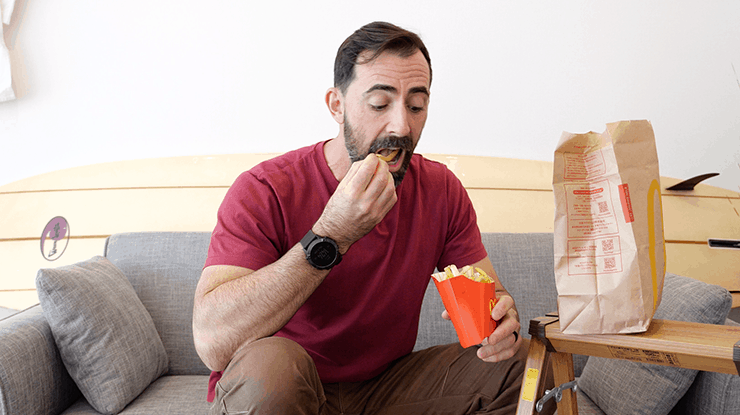

After almost thirty years as a physical therapist, food is one of the topics I get asked about more than any other outside the clinic.
People want to know what they should eat. They’ve usually read four contradictory things in the past month and they’re hoping I’ll be the tiebreaker.
I rarely am.
Food works differently for different people, and figuring out what works for you takes attention and time. That’s not the answer most people want, but it’s the real one.
I’m not a nutritionist, and we don’t sell a nutrition program. What I can offer is a framework for thinking through your own food choices using the same approach we apply to training: pay attention, test what works, adjust based on what you observe.
Quick note before going further. Frankly, we don’t care what diet you follow. Vegan, carnivore, mayo enthusiast, fine with me. There are a million ways to eat well and people will fight to the death over their preferred one. I’m not interested in that fight, and this article isn’t taking a side in it.
The one place I’ll push back is on the moralizing. Foods aren’t good or bad in some absolute sense. What matters is whether they work for your body, your goals, and the way you actually live.
People Vary More Than You’d Think
The thing that hits you in the clinic, after enough years, is how different people are from each other. Not just in their training history or injury pattern. In how their bodies handle inputs.
Two patients in their forties, similar training profiles, similar baseline bloodwork. One eats eggs and bacon every morning and his lipid panel comes back textbook clean. The other eats the same breakfast and his numbers slide sideways within a few weeks. Same food, completely different bodies.
That’s not a diet failure on either side. It’s individual variation, and you should expect it.
This shows up in less dramatic ways too. Some people feel sharp after a heavy lunch. Others crash. Some can drink coffee until 8pm and sleep fine. Others lose the night if they have a cup at noon. Some bodies handle gluten without complaint. Others don’t.
Working out which kind of body you have is honestly more important than picking the “right” diet. The right diet for you is the one your body responds well to.
Six Ways to Evaluate Your Food Choices

What if you’re not yet tuned in to how your body reacts to specific foods? You can still make good choices using a few basic evaluation tools.
Quick caveat: don’t run all of these on every meal. That way lies food anxiety, and food anxiety is its own health problem. Pick the ones that match what you’re trying to figure out and let the rest sit in the toolbox.
The First Bite to Last Bite Test
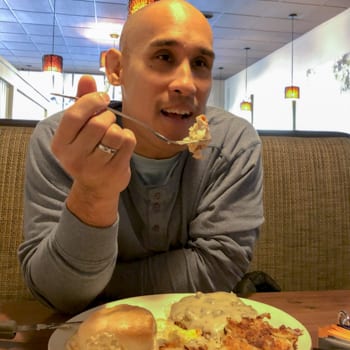 Pay attention to how your enjoyment changes from your first bite to your last. A food that’s exactly what you wanted on bite one but leaves you regretting it by bite ten isn’t the right food, or at least not in that quantity.
The foods I want to eat regularly are the ones that make me excited to be hungry again. They leave me feeling good when I’m done and looking forward to the next time. That’s a useful signal.
If a food consistently leaves you feeling worse on the back end, eat less of it or rotate it out.
Color, Taste, Texture, Freshness
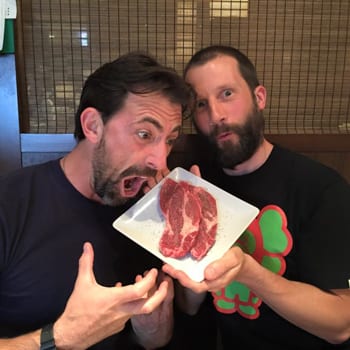 This applies mostly to fresh foods rather than packaged or preserved ones. If you’re choosing things that are colorful, flavorful, have real texture, and are actually fresh, you’re naturally going to land on better food more often.
Ryan eats a lot of raw fish in Japan, where freshness is the line between dinner and food poisoning. That’s an extreme version of the same principle. The wilted bag of spinach you ignored for ten days is telling you something. The crisp one isn’t.
Calories vs. Satiety
 If fat loss is a goal, this matters. Foods high in calories that leave you hungry an hour later are going to be hard to build a sustainable plan around.
Some people try to eat very calorically dense foods in small portions to keep total calories low. The math works in theory. The reality is that walking around hungry for most of the day works for about three days, and then it doesn’t. Almost nobody can sustain prolonged hunger.
The shortcut: high water content tends to mean lower caloric density. A baked potato and an equal volume of potato chips aren’t even in the same neighborhood, and most of that gap is water. (And oil, but mostly water.)
You can still eat dense foods. You probably do want most of your food to be the kind that fills you up at a reasonable calorie cost.
Micronutrient Density
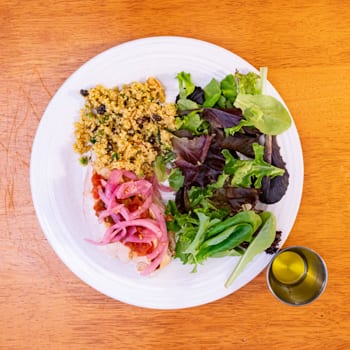 Related to caloric density but distinct. Micronutrients are vitamins, minerals, and the various compounds in food that don’t show up in the calorie count but do most of the work of keeping you running well.
Most fruits and vegetables are nutrient dense. Pretzels and popcorn aren’t. For general health and for training recovery, most of your food should sit in the dense column.
This isn’t a no-hot-fudge-sundae rule. It’s a default-setting rule. The default goes nutrient-dense. The exceptions are exceptions.
Suitability as a Staple
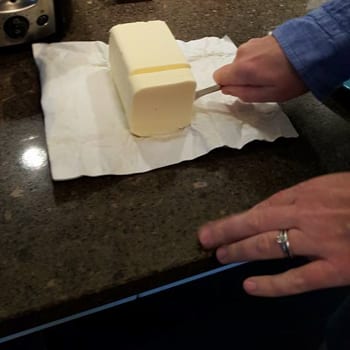 The foods marketed as “healthiest” are often the least practical for normal people. As Andy puts it: “Who’s got a fridge full of acai, kale, and cold-pressed almond oil? I don’t care how healthy something is if I can’t make it a part of my regular diet.”
If a food requires a special trip, costs a fortune, and doesn’t fit how you actually shop and cook, it’s not going to be a staple. Find the closest realistic version. There’s almost always a good substitute that you’ll actually eat.
Ease of Preparation
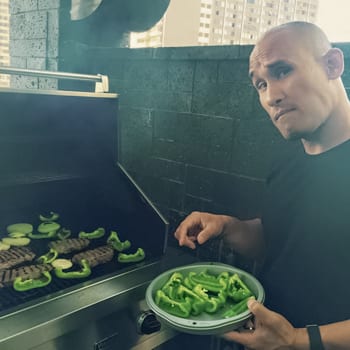 Some people genuinely love cooking, no matter the complexity. Most people don’t, and pretending you’re going to spend an hour on dinner four nights a week when you’ve never done that before is a setup for failure.
Pick foods you can actually prepare given your real schedule. A crock pot or Instant Pot can do a lot of work for you. Keeping some no-prep options around for the days when even crock-pot effort feels like too much is also fine. The point is to make good food the path of least resistance.
A Reasonable Default for Most Meals
You probably know you need some balance of protein, fats, and carbs. The argument is over what that balance looks like, and every diet writer in the world has a different opinion. I’ll spare you mine and offer a defensible default:
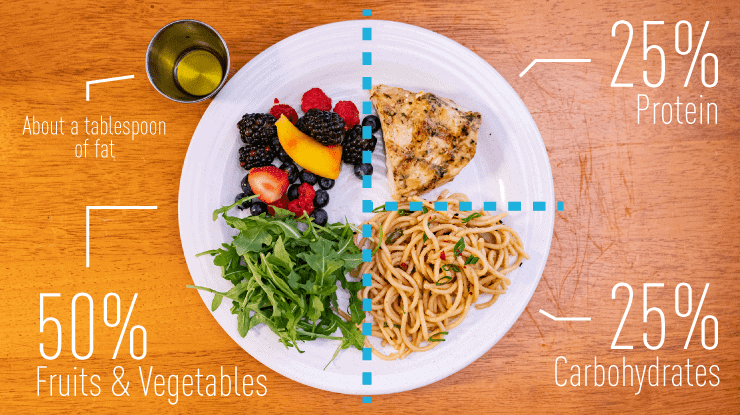
This isn’t gospel. It’s a reasonable starting point for most people most of the time. It works as a default precisely because it’s flexible enough to adjust based on what you observe about yourself.
Most Days Are Regular Days
The 80/20 framing is useful here. About 80% of your eating happens in the rhythm of normal life. The other 20% happens in unusual circumstances.
For regular days, aim for the macro balance above and use the evaluation tools where they help. You won’t hit it every meal. Hitting it most of the time is enough.
What counts as “regular” depends on you. I had a patient who travelled three weeks out of every month for work. For him, hotel rooms and airport food were regular. The standard advice for “regular life” assumed a kitchen he saw four nights a month. He needed a version of regular built around the life he actually had.
The point: figure out what your real default conditions are and build your defaults to match.
Eat the Birthday Cake
The biggest mistake people make changing their eating is expecting to maintain the new pattern through events that don’t fit it. Birthdays, anniversaries, the trip to Italy you’ve been planning for five years, none of these are the time to enforce your normal rules.
Going to Italy and refusing the pasta because it doesn’t fit your plan is the wrong call. Eat the pasta. Have the wine. Come back and resume your defaults.
The trap on the other side is using “special event” as cover for eating like a different person three days a week. If your “special events” calendar includes most weekends, those aren’t special anymore. Those are part of your regular life and need to be accounted for as such.
How to Eat at Restaurants
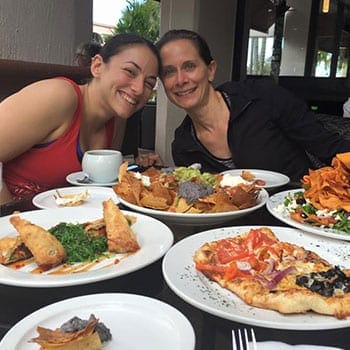 Restaurants don’t have to wreck your defaults, especially if you eat out often.
Most places have something workable. A protein with a vegetable side and a starch is a balanced meal whether you cook it at home or order it from a menu. The mindful choices come at the margins. Accept or skip the bread basket. Get a second vegetable instead of fries. Ask how something is prepared.
None of this has to be rigid. The point is to make conscious choices instead of letting the menu choose for you.
Build the Skill
Sustainable eating isn’t built on dogma. Diets work for some people for some periods of time, then most of them stop working. What lasts is the underlying skill of paying attention to what your body responds to, evaluating your options as they come up, and adjusting based on what you learn.
This is the same approach as the AAA Loop in our training programs. Assess what’s happening. Address the gap with a specific change. Apply the change and observe what it does. Food and training are different domains, but the thinking process is the same.
If you want to talk through how the food choices you’re making affect your training, that’s the kind of conversation that happens regularly inside Alpha Posse. Members share what’s working, what isn’t, and what they’re testing. We don’t coach diet, but we do help people think clearly about how the pieces fit together.
In the meantime: pay attention, test, adjust. That’s the framework.

Hi, I'm Jarlo Ilano PT, DPT 👋
Jarlo Ilano, PT, DPT, OCS has been a Physical Therapist since 1998. He earned his Doctorate of Physical Therapy in Musculoskeletal Management from Evidence In Motion, was board certified as an Orthopedic Clinical Specialist with the American Board of Physical Therapy Specialties, and is a certified Therapeutic Pain Specialist through EIM/Purdue University.
In addition to cofounding GMB, Jarlo has been teaching martial arts for over 30 years, with a primary focus on Filipino Martial Arts. He designed our Train Without Pain guide and our knee and shoulder restoration programs.