Foundation Training is one of the few programs outside our own that we consistently recommend to clients. We’ve been using it ourselves for years. Ryan has trained through the streaming platform. I’ve used it to fix a back problem that was wrecking my quality of life. And we know Eric Goodman personally, so we can tell you about the guy behind the method, too.
We run GMB Fitness. We’ve helped over 125,000 people build practical physical capability through structured movement training since 2010. We also make our living developing and selling training programs, which means we’re selective about recommending somebody else’s product. Foundation Training earns it.
Here’s what it is, what it does, and why we think you should try it.
What Foundation Training Actually Is
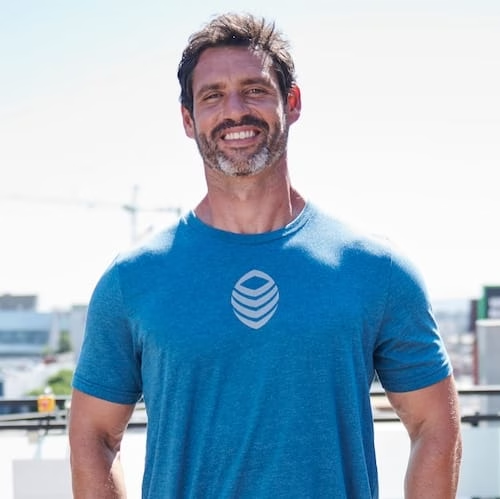
Foundation Training is a system of exercises built around one principle: teaching your posterior chain to work as an integrated unit again.
Your posterior chain is the whole connected system of muscles running up the back of your body, from your calves through your hamstrings, glutes, spinal extensors, and lats. These muscles are designed to work together as a coordinated team. Modern life, specifically sitting for hours every day, dismantles that coordination. The muscles are still there. They’ve just stopped talking to each other.
Eric Goodman, the chiropractor who created FT, calls it “complacent adaptation.” Your body adopts movement patterns that route force through your joints instead of through those big posterior muscles. Your lower back takes the hit. Your hips lose their ability to lead movement. Your spine compresses. And eventually, stuff starts to hurt.
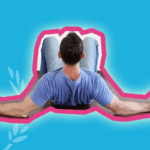
Foundation Training re-teaches those muscles to fire together through a series of specific poses and isometric holds. The signature exercise is called the Founder. It looks simple. You hinge at the hips, reach your arms forward, pull your hips back, and hold. Your chest stays high. Your hamstrings and glutes engage hard. Your spinal extensors light up.
It’s about 90 seconds of work, and you’ll be surprised how much you feel it.
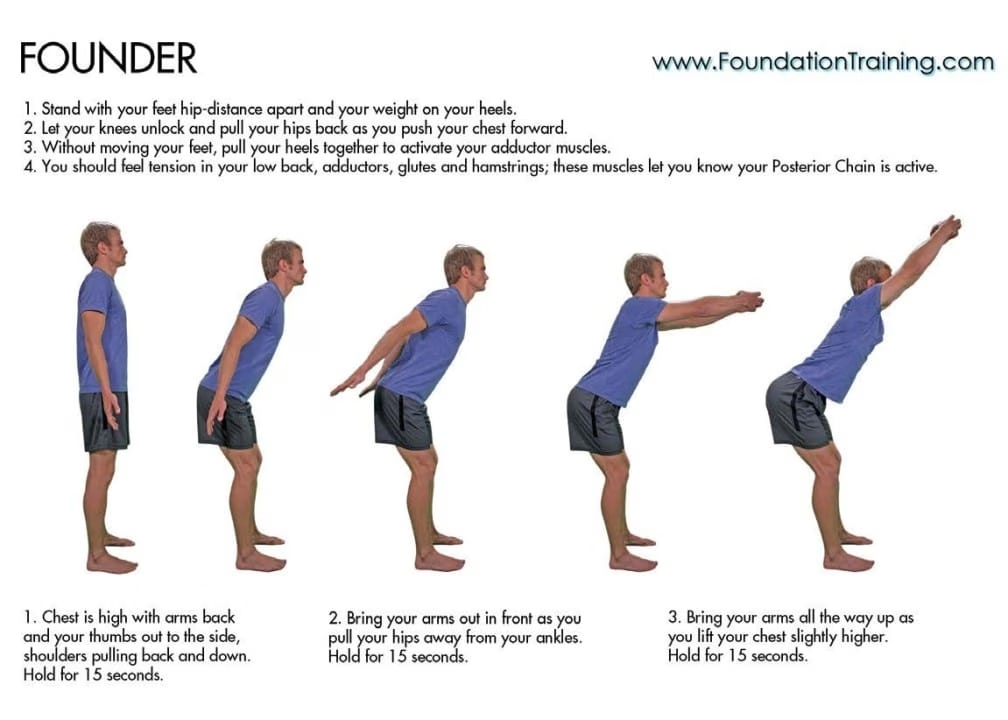
Here’s Eric teaching it himself:
The other core element is what Eric calls decompression breathing, a breathing pattern that expands the rib cage and creates space in the torso. It trains the serratus and lat muscles to work together in a way that widens and lengthens the torso, which takes compressive load off the spine. If you’ve been sitting at a desk for a decade, that decompression is doing real work.
FT also trains internal rotation patterns at the hips and a specific “anchoring” engagement from the arches of the feet through the adductors to the pelvis. The combination creates traction that pulls compressed structures apart, giving the spine room to extend and strengthen. Eric developed all of this through years of daily practice on his own body, originally to avoid the spinal fusion surgery he’d been told he needed at 27. He’s 43 now and has practiced Foundation Training every single day for 16 years.
That’s the kind of skin-in-the-game that matters.
Ryan’s Experience: A BJJ Injury and What Fixed It
Ryan Hurst has been training movement for over 40 years. He started in gymnastics as a kid, holds multiple martial arts ranks, and has spent the last 15+ years developing movement training programs professionally. He’s done a lot of things to his body, and his body has opinions about some of them.
About three years ago, Ryan hurt his lower back doing Brazilian jiu-jitsu. It was bad. The kind of bad where you start thinking about how many more years you can keep doing this.
Eric got on video with him, assessed what was going on, and prescribed specific Foundation Training exercises. Over the course of a month, Ryan’s back improved substantially. He kept going. He signed up for the FT streaming platform and trained through their programs for about six months.
That’s worth pausing on. Ryan runs a movement education company. He has access to every exercise, mobility routine, and rehab protocol that exists in our world. He chose to pay for Foundation Training’s streaming membership and use it daily for six months because it was that effective for his specific problem.
He still uses it. When his lower back tightens up from too much sitting or from grappling, FT is what he goes back to. The Founder and the eight-point plank are his go-to exercises. Ryan describes FT as being about more than just the core or the back. It’s about body mechanics and body awareness, learning to feel where the tension is and how to redirect it through the right structures.
His words: “I think it’s one of the better things you can do for your back, as well as your hips, by far.”
My Experience: From Afraid to Move to Reaching for FT Instead of Tylenol
In GMB’s early years, Ryan did all the video work, Jarlo did all the writing, and I did everything else. Business admin, marketing, tech, customer support. That meant sitting at a computer in a crappy chair at a crappy desk for 12+ hours a day, weekends included. I’d recently moved and didn’t have a dojo nearby, so my Taido practice had dropped off completely. I wasn’t taking care of myself and I knew it, but I was too busy keeping the business alive to do much about it.
My left hand developed RSI and numbness. My back started locking up. At first it was just stiffness after long sessions. Then it became pain. Then I was spending my first few minutes every morning lying in bed, afraid to move. I’d eventually roll to the edge, lever myself into something resembling a standing position, and drag ass to the bathroom trying to get fully upright before I had to face the day.
When Ryan and Jarlo came to Hawaii so we could film our next program, I had to modify movements I was supposed to be demonstrating. Things I’d previously been good at caused severe pain in my lower back and shooting down through my left leg. It was humbling. It was embarrassing. And it hurt.
Jarlo connected me with a physical therapist friend. That helped some. I found a chiropractor. That helped some too. But neither seemed to address the actual problem, and I kept ending up back in pain.
Then I found Eric’s 12-minute routine on YouTube. I watched it and appreciated his teaching style and his explanation of what the exercises were doing and why. I tried it. And it seemed to help. Surprisingly well. So I did it again. And again.
I made Foundation Training part of my daily routine because it was almost like magic how well it worked. I kept up the manual therapy and the PT exercises (sometimes), but FT was the daily maintenance that actually made a consistent difference.
I don’t do it every day anymore, or even every month, because I don’t have to. But my back gets a bit wonky sometimes when I’m pulling long hours, and Foundation Training is what I reach for. By now, I know literally every exercise that might contribute to back health and pain relief. I know how to be healthy. But life comes with compromises, and FT is the best tool I have for both relief and protection.
Better than Tylenol. Better than stretching. Better than lying on the floor feeling sorry for myself, which was my previous protocol.
Where Foundation Training Fits Alongside Other Training
Eric says something we agree with completely: Foundation Training can’t stand alone. He calls it “scaffolding.” It creates space and posterior chain integration, which makes everything else you do work better. But it’s scaffolding, and scaffolding needs a building.
FT handles one specific and extremely important job: restoring the foundational tension patterns that let your body move well under load. Decompression. Hip-driven movement. Posterior chain coordination. If those things are broken, everything else you do is compensating around the dysfunction.
Once that scaffolding is in place, you need actual training. Progressive strength work. Locomotion and ground movement. Full range-of-motion skill development. That’s what our programs like Elements are built to do.
The practical fit looks like this: you’re 45, you have a desk job, your back protests if you sit too long, and you want to stay active for decades. Foundation Training handles the decompression and posterior chain work that keeps your back healthy and your hips leading your movement. Elements builds the locomotive strength, body control, and movement skill that gives you actual physical capability. Together, they cover more ground than either one alone.
Eric has described FT as “the missing link” for people who are already active and trying to do things for themselves but keep hitting a wall. They’re strong enough. They’re motivated. Something is just off. His experience, and ours, is that the “something off” is usually posterior chain integration and spinal decompression. Once those click, everything else starts working.
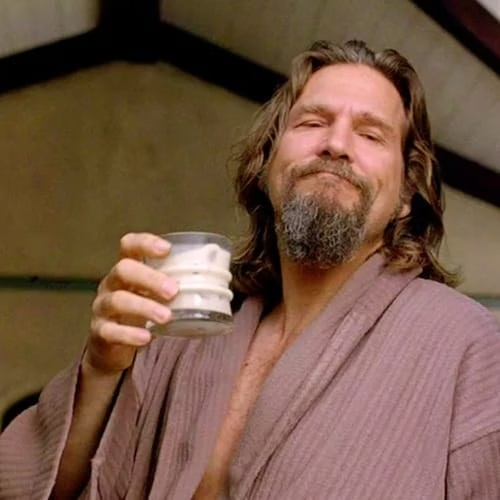
Jeff Bridges has been doing Foundation Training for years. Yes, The Dude abides by posterior chain integration. And so does the USA Men’s Water Polo team, Kelly Slater, and a small army of physical therapists who’ve gone through FT’s certification program. When 65% of your certified instructors are healthcare professionals, that says something about the method’s clinical credibility.
The Streaming Membership: What You Get and Whether It’s Worth It
Foundation Training’s streaming platform runs $27.99/month or $199.99/year (which works out to about $17/month). Both come with a 7-day free trial.
The content library includes structured programs at different levels. “Build Your Foundation” is the introductory series. The “Baseline Program” covers all current poses and principles. “Protocols for Pain” targets six specific body areas (neck, shoulder, back, hip, knee, foot/ankle). There’s also an advanced collection and live classes that get recorded for later viewing.
You can access it on your phone, tablet, computer, Apple TV, Roku, Fire TV, and Android TV. The app works. It occasionally buffers mid-workout, which is annoying but not a dealbreaker.
The exercises work fast. Many people feel changes within the first few days. Eric’s marketing says “pain free in less than 30 days,” and based on our experience and what we’ve seen from users across Reddit, app store reviews, and fitness forums, that’s aggressive but plausible for a lot of people. The first two weeks are the hardest because your body is adapting to using muscles it’s been ignoring. After that, the exercises feel like home.
The annual plan is reasonable value for something you’ll use regularly. The monthly rate is steep if you’re only dipping in casually. But the free trial and the extensive free content on YouTube (including the Founder video above) make it easy to test before committing.
Try Foundation Training free for 7 days
What FT Doesn’t Do
Foundation Training is specific. It builds posterior chain integration, spinal decompression, and hip-driven movement patterning. It does these things exceptionally well. It does not build progressive strength through resistance. It does not develop locomotor skill. It does not train full range-of-motion movement capability in multiple planes.
Eric is transparent about this. He’s said explicitly that FT “could never stand alone” and that it serves as scaffolding for other training systems. His team is building out a strength component with their coach Jesse, integrating kettlebells and powerlifts on top of the Foundation Training base.
If you’re looking for a complete movement practice that develops strength, mobility, and body control through progressive training, that’s what we built Elements to do. FT and Elements together make a strong combination because they address different layers of the same problem: Elements builds capability, FT maintains the structural foundation underneath it.
About Eric Goodman
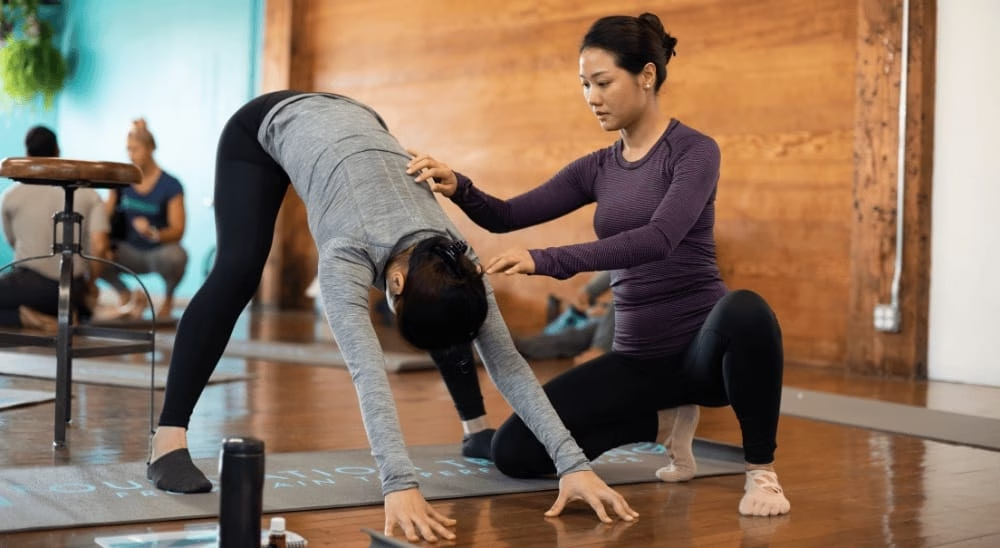
Eric is a Doctor of Chiropractic who developed Foundation Training to fix his own back and has spent 16 years refining it through daily personal practice and work with thousands of clients and over 1,300 certified instructors worldwide. He’s genuine, deeply knowledgeable about the body, and refreshingly direct about what his method does and doesn’t do.
He’s also a friend. We’ve known him for years, shared ideas, and watched each other’s work develop. Ryan talks shop with Eric and his business partner Jesse regularly. This review is informed by that relationship, and we’re transparent about it: we have an affiliate relationship with Foundation Training, which means we earn a commission if you sign up through our link. We recommend FT because we use it and because it works, and the affiliate relationship exists because the recommendation came first.
One more thing Eric says that we think is worth repeating. He frames the competition in this space differently from most people. Movement practitioners aren’t competing with each other. The real competition is surgery, injections, and pain medication. Anyone who teaches people to move better and take care of their own body is on the same team.
We agree. Foundation Training belongs on that team.
Try Foundation Training free for 7 days →
Build Practical Strength and Movement Skill
Foundation Training builds the posterior chain foundation. Elements builds the strength, mobility, and body control on top of it. Together, they cover more ground than either one alone.

Hi, I'm Andy Fossett 👋
A lifelong martial artist and former schoolteacher, Andy’s deeply concerned with autonomy and fitness education. As CEO of GMB Fitness, he’s dedicated to providing an open, accessible culture for both clients and staff to enjoy exploring more of what they’re truly capable of.
He's best known for his wildly off-topic rants on the GMB Podcast and spends the majority of his time eating burgers, sipping bourbon, and reading books.