
We’re teachers.
So when we think about creating a training program, we don’t stop with the six-week transformation or your first muscle-up.
We designed our training programs as a curriculum that builds cumulatively over time.
Elements develops your movement foundation. Integral Strength and Mobility build specific attributes on top of that foundation. Sequences takes everything you’ve developed and applies it to dynamic combinations and flows.
That’s easy to say. It’s a lot more convincing when you do it, but seeing it in context is a good start.
So I recorded these complete session walk-throughs for you.
You can see below exactly how these programs work, with me talking you through what’s happening and why. You’ll see how each program works on its own, and you’ll see the same session structure carrying you from your first 15-minute Elements session all the way to combination skills in Sequences.
If you want the full map of how the programs connect, the Praxis Curriculum roadmap lays it all out. This article shows you what the training looks like from the inside.
How Praxis Training Sessions Work
Every session in our programs runs on the same structure. We call it the 5P Protocol: Prepare, Practice, Play, Push, and Ponder.
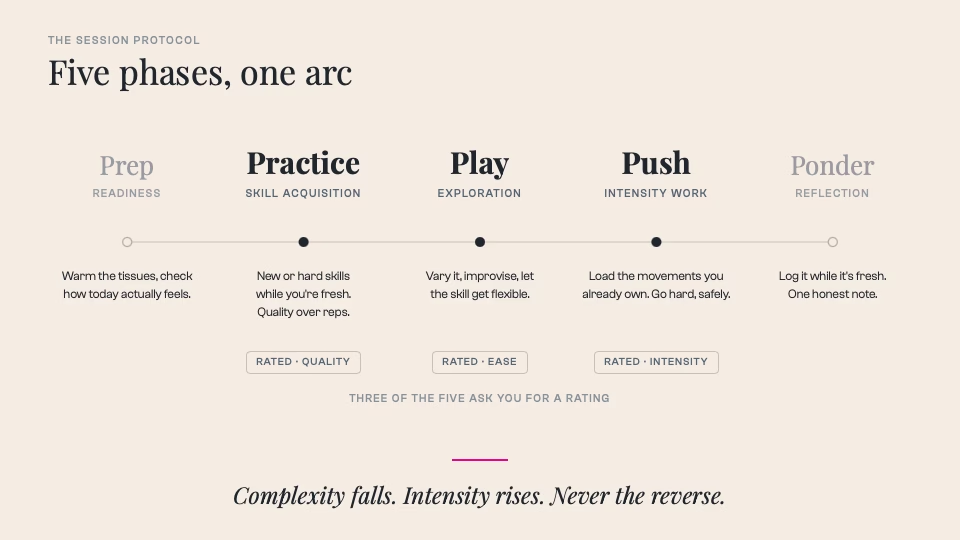
Prepare warms up the specific joints and patterns you’ll use that day.
Practice is where you learn and refine skills while you’re fresh.
Play lets you explore and combine movements you’ve already practiced.
Push brings the complexity down and the intensity up, so you can work hard with good form.
Ponder closes the session by rating how you felt and how you moved, which feeds into your next session.
Each phase does a different job, and they’re in the order that creates the best stimulus for your muscular, respiratory, and nervous systems. You do the work that needs the most attention first, and the work that needs the most effort last.
Some sessions lean harder into Practice, and some are built around Push. The structure adapts to what that day’s training is for.
Two more things you’ll see in every video. First, after Prep, the platform asks how you’re feeling. If you’re dragging, it routes you to a shorter, lower-intensity session instead of guilting you through the full one. Second, we use timed sets instead of rep counts. The clock runs, and your job is one beautiful repetition at a time, with as much rest between attempts as you need. This is how you build autoregulation, which might be the most valuable skill in any of our programs.
Okay, let’s train.
Elements: A Full 15-Minute Session
Elements is the foundation of the curriculum, and this is a session from the first part of the program, focused on the Crab.
You’ll notice the Prep isn’t a generic warm-up. Every movement in it, from wrist circles to the quadruped twist, is chosen to get your body ready for the specific work coming later in the session.
You’ll also see Levi, who’s demoing the session, make small adjustments the whole way through. Keeping his hips lower on the Crab. Coming up on his fingers in the squat. This is the heart of how Elements works: every movement scales, and scaling starts with a simple question. How can I make this movement feel better? You’re building awareness of your own body, and that awareness is what makes every rep count.
One thing I want to be clear about, because it surprises people: even though a demo plays on screen during each timer, this is your practice, at your level. The demo is a reference. Your attention belongs on what’s happening in your own body.
Elements sessions come in 15, 30, and 45-minute versions, so it fits around your life. Levi’s a firefighter and a father who trains Brazilian Jiu-Jitsu, and 15-minute sessions are how Elements fits into his week.
When Elements Gets Too Easy
Now, you might watch that first video and think the movements look simple. Bear, Monkey, Frogger, Crab. You’ve been doing stuff like that since you were a kid, right?
Here’s me working through a session from the midpoint of Elements, making every movement as hard as I can.
Same program. Same session structure. But watch what happens when you front-load the Bent Arm Bear, hold longer pauses in the Monkey Stall, slow the tempo down instead of speeding it up, and keep your mouth shut so every breath goes through your nose. I was sweating like crazy by the end of that Push section, and I’ve been training these movements for decades.
This range is built into the program. Elements has three tracks: Gradual for beginners or anyone coming back from injury, General for most people, and Accelerated for experienced movers who want harder variations at a faster pace. The movements stay accessible at the bottom and stay challenging at the top, which is exactly what you want from a foundation. You never outgrow it. You just keep finding deeper levels in it.
Integral Strength: A Full Session
Once you’ve built your base in Elements, Integral Strength develops the attribute most people want next: strength you can use in athletic, practical movement.
In this session I’m running the bar track. IS comes in three versions depending on your equipment: bodyweight only, bodyweight plus a bar, and bodyweight plus gymnastic rings. Same program, three difficulty levels, and you choose based on what you have and where you are.
The Practice section here works the Cossack Squat and the Bar Jump to Negative Chin-Up, and then Push runs a circuit of seven movements, from kneeling push-ups through lunges, hollow body holds, and jumps. You’ll notice this session skips Play entirely. That’s by design. Strength work needs focused practice and honest effort more than it needs exploration, so IS sessions weight the phases differently than Elements does.
You’ll also see the timed sets doing something clever. As you get stronger, you complete more quality reps in the same window, so your training density rises on its own. You never have to guess when to add reps. The clock and your quality decide it for you.
And if you watched the Elements videos closely, you’ll recognize some of the Prep movements, like the kneeling lunge and the back flexion to extension. That’s the continuity working. The vocabulary you build in Elements shows up everywhere after it.
Sequences: A Full Session
Sequences is where everything comes together. It takes the movement base from Elements and the attributes from Integral Strength and Mobility, and applies them to dynamic combinations: swipes, kips, flowing transitions.
This session works the Swipe to 90/90 transition, the Floor Kip, and the Snake Down. Watch Eduardo string those together and you might think there’s no way you could do that. And on day one, you couldn’t. Neither could he. Every combination in Sequences gets built piece by piece. You practice each movement on its own, many times, before the program ever asks you to connect them. This session comes from later in the program, after all that groundwork is done.
You’ll see the same session engine running. The feeling-good check after Prep is here too, and I love it in this program especially, because Sequences sessions are demanding. On a tired day, you do the 15-minute low-intensity version, keep your practice alive, and come back fresh.
The Push section includes the Side Shrimp, which comes straight from my judo days in Japan. If you’ve trained Brazilian Jiu-Jitsu, you’ve done this movement and you have opinions about it. It’s in there because it works.
And the Ponder section gets a full walkthrough at the end: rating your favorite movement, the most challenging one, how the session felt, and how you moved. Those ratings build a record over time, and that record teaches you things about your training that no rep log ever could.
Sequences does have prerequisites. We recommend completing Elements at least once on the General or Accelerated track, and there’s a self-assessment you can try to make sure you’re ready.
The Core Curriculum in Context
Here’s the whole Core Curriculum in one picture.

Elements first. Then Integral Strength, Mobility, or both, depending on what your body needs. Then Sequences. Each program is complete on its own, and each one hands you off to the next with the skills it requires already in place.
You saw in the videos that the sessions do the thinking for you. The tutorials, the timers, the scaling options, the low-intensity branches, the session ratings. All of it is built in. Your job is to show up, hit start, and practice.
Build the Foundation Everything Else Stands On
Elements teaches you to move with strength, control, and awareness using just your bodyweight and a bit of floor. Every program in our curriculum builds on what you develop here.
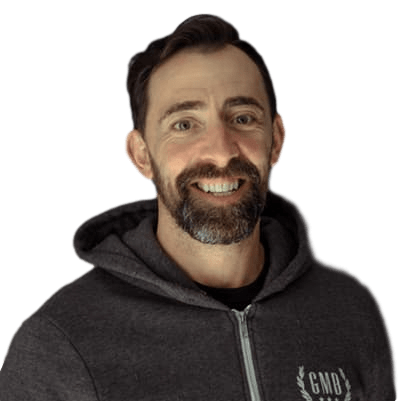
Hi, I'm Ryan Hurst 👋
After a training accident ended his competitive gymnastics career, Ryan moved to Japan, where he spent close to 30 years training and competing in judo, kendo, and other martial arts until another injury made him rethink what training is for.
As Head Coach, he leads program design and teaches every week on our YouTube channel. His book, Stay On The Mat Forever, is aimed at helping you keep training for decades. He loves handstands, dogs, and hiking.