
Mobility and flexibility are tangled up together. You can’t really train one without the other, which makes the online fight over which word is “correct” a waste of time.
People use these terms loosely. Someone tells you to work on your flexibility when they mean mobility. Someone else tells you to work on your hip mobility when they mean flexibility. The actual distinction is simpler than the argument, and knowing which one you need changes how you train.
Flexibility Explained

When you’re flexible, your soft tissues (muscles) tolerate a stretch more easily than someone who is considered tight.
Think about when you’re standing up straight. Your hamstrings are in a lengthened position. So when you bend over to touch your toes, your current flexibility will determine if you can do so comfortably.
If you ever notice it’s hard to put your body into a position like touching your toes or sitting cross-legged, it’s because the muscles are tense. They essentially “fight back” against the stretch and lengthening. And the tension makes getting into these positions difficult.
Sinking down into a full squat might be hard for you because of tight hips, calves, or back muscles.
As a result, your flexibility limits will cause a lack of mobility.
Understanding Mobility

When discussing mobility, it’s more about how your body moves through space. Body mobility in general includes actions like getting out of bed or off the ground after you trip and fall.
You can also think about it in regards to specific body areas, such as how easily you can flex and extend your arms, legs, or hips through a full range of motion.
The Mobility Vs. Flexibility Debate

Flexibility is often thought of as a ‘passive’ trait. Think about someone you know who can sit down without any warmups and do a full split. You’d say they were flexible.
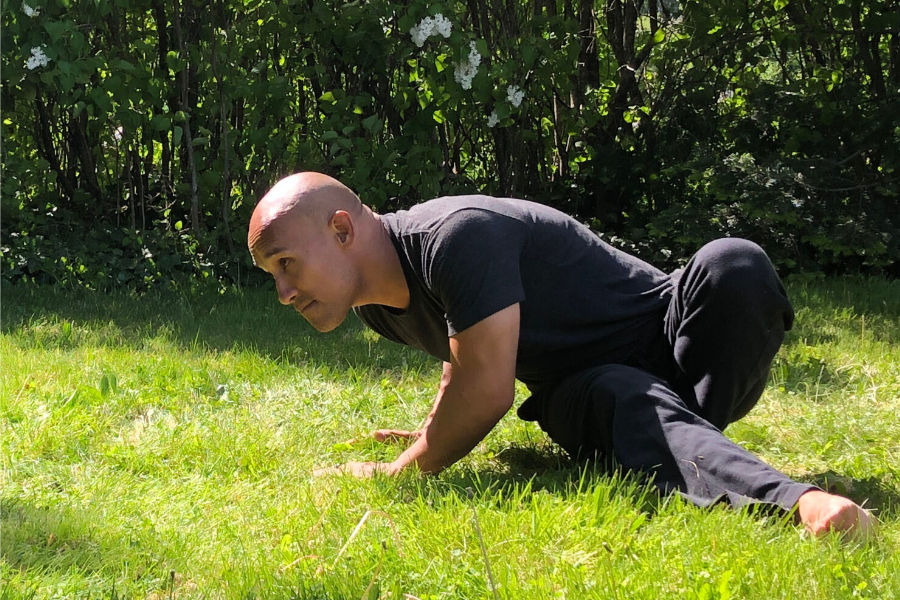
Mobility tends to remind us of something ‘active.’ Think about how you’re moving for a specific reason, like sinking down into a pistol squat. Or doing the frogger, which requires a lot of hip mobility.
But, you can’t have this mobility without being flexible and vice versa. Because they’re both connected, a better way to think about this is from a practical standpoint. What activities do you need to be doing to achieve your movement goals?
If stretching has frustrated you in the past, this is usually why: people work on flexibility in isolation without thinking about what they actually want to do with it.
If you need to reach your arms overhead but struggle to do so, it might be that your lats are tight, and you’ll need to work on improving that.
The Right Type of Stretching
With stretching, we have two types: passive (static) and dynamic (active). We recommend both because they work well. (There are several other stretching methods worth knowing about, but for most people these two are the ones that matter.)

But what you do will be up to you and your goals. When you stretch, there has to be a purpose. Instead of ‘being flexible’ for the sake of it, we’d rather you pick a goal.
If you want to squat with deeper, better form and without pain, what muscle groups are limiting you? The answer will determine how and what muscles you stretch.
Passive stretching is where you get into a stretched position and then hold it for a period of time. Think about when you sit on the floor and bend forward to grab (or try to) your toes. You might hold this for 30 to 60 seconds, slowly easing into the stretch.
Dynamic stretching, where you swing your arms or legs back and forth, or kneel into a lunge position, are also helpful.
The main difference here is the time spent in the stretched position. How many forward lunges would you need to equate to 30 seconds of a static hip flexor stretch?
You’re likely better off sitting into the lunge position for 3 sets of 60 seconds if your goal is to be more flexible.
Don’t Get Hung Up On This Debate Between Mobility And Flexibility, M’kay?
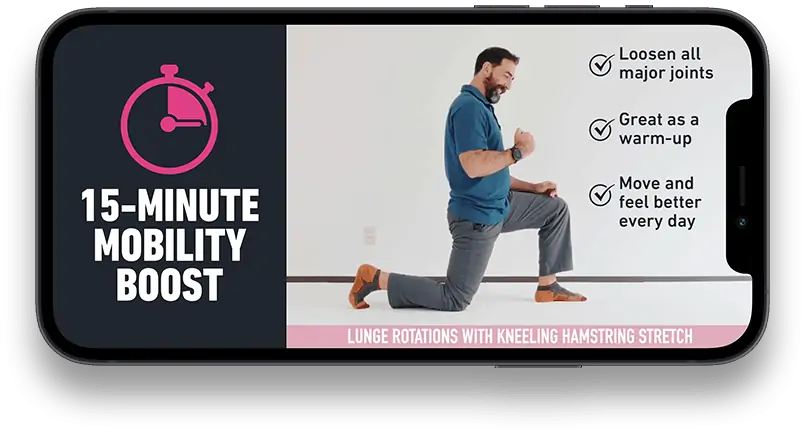
Be like 125,000+ GMB clients and start getting flexible fast. Grab our 15-Minute Mobility Boost 👉 Click here to download it.
This also comes down to where you are individually. If your squats are tight, it’ll take you longer to work through all the muscles involved than it would for someone with a better range of motion.
And that’s okay. We want you to know that it’s a process and you can get more flexible over time if you want to.
If you’re one of those people who’s already flexible, you can maintain it quite easily. You only need to perform dynamic movements often to hang onto your flexibility.
Be Wary of ‘Mobility Experts’
If you’re concerned about your mobility, you’re not alone. It’s a common word thrown around. And you’ve likely read about the ‘dangers’ of your ‘stiff’ condition.
Lots of so-called ‘experts’ prey on the confusion around this topic. They want to sell you on fixing your mobility and flexibility with some proprietary technique.
And you better act fast because there are limited copies of their PDF program. 😂

But I’m here to tell you this: there is nothing special or magical about getting more flexible and mobile. It’s all about doing the work on a regular basis.
For example, if you sit in a chair 8 hours per day, your hips are bound to be tight. The solution? It’s not a fancy massager or supplement to loosen up those muscles.
It’s regular, dedicated stretching and exercise that will reverse your stiffness. It’s getting down on the floor and stretching those hips often. That’s what’s going to work, nothing else.
Improving Flexibility And Mobility, The Smart Way
Remember: you can’t have flexibility without mobility. They’re both intertwined and you can’t get one without the other.
Everyone needs some stretching and movement daily. The amount you need will vary based on your goals and current flexibility.
Regular stretching and regular movement work for just about everyone, and having a structured program makes it much easier to stay consistent. Our programs combine both alongside the strength and coordination that make your flexibility actually useful in your life.
Build Flexibility That Actually Helps You Move
GMB Mobility is a guided program that improves your total body mobility. You’ll resolve restrictions so you can finally move and perform your best.
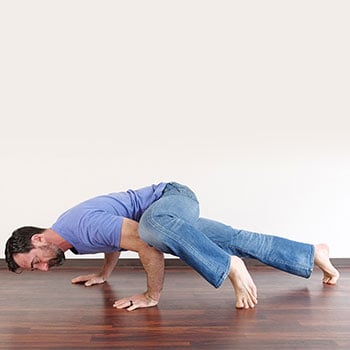
If you’d rather start with a program that builds flexibility, mobility, strength, and coordination all together, Elements is where most of our clients begin.

Hi, I'm Jarlo Ilano PT, DPT 👋
Jarlo Ilano, PT, DPT, OCS has been a Physical Therapist since 1998. He earned his Doctorate of Physical Therapy in Musculoskeletal Management from Evidence In Motion, was board certified as an Orthopedic Clinical Specialist with the American Board of Physical Therapy Specialties, and is a certified Therapeutic Pain Specialist through EIM/Purdue University.
In addition to cofounding GMB, Jarlo has been teaching martial arts for over 30 years, with a primary focus on Filipino Martial Arts. He designed our Train Without Pain guide and our knee and shoulder restoration programs.