We started teaching locomotion exercises over a decade ago. Bear crawls, monkey walks, froggers, crabs. Moving your body through space on all fours.
They got strange looks at first. They still do sometimes.
But these movements have been part of gymnastics, martial arts, and physical education for a long time, and what they develop is something conventional training tends to miss: the ability to coordinate your whole body through positions and transitions that you simply never encounter standing upright or sitting on a machine.
If you’ve ever felt like your training is solid but your body still doesn’t move the way you want it to, locomotion is probably the missing piece.
What Locomotion Trains That Other Exercise Doesn’t
The restrictions and decrease in capability that most active people feel as they get older are almost always due to a deficiency in one or more of these:
- Adequate strength you can rely on at any time, in any position
- Reasonable flexibility and mobility through all your joints
- Confidence in your ability to move smoothly, with control through any range of motion
Locomotion exercise addresses all three simultaneously. No, it won’t make you as strong as an olympic weightlifter or as flexible as a contortionist. But frankly, you don’t need those levels of ability to move and feel better in everything you do.
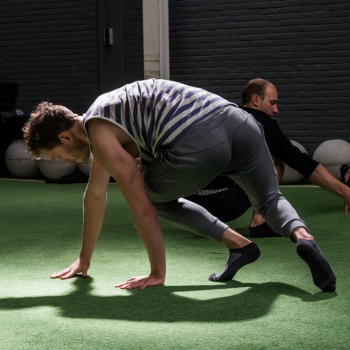 One key aspect of these movements is that they require you to place your hands on the ground. This stimulates and challenges your upper body and core in a way that upright exercises can’t replicate. Locomotion work demands greater involvement of your spine and trunk in creating and managing dynamic forces. Your upper back is compelled to work and stabilize to maintain proper positioning while your weight shifts between your hands and feet.
This particular stimulus is rare in everyday life and in most gym training. And it significantly builds the capacity of your upper body and trunk to serve as a stable, responsive platform for everything else you do physically.
That includes building physical resilience, the ability of your joints and connective tissues to handle unexpected stress. Training your body through unusual positions and weight shifts conditions it for the kind of unpredictable demands that would otherwise be injury opportunities.
The Bear, Monkey, Frogger, and Crab
These four categories of locomotion exercises form the foundation of what we teach. When performed with good intent and in a variety of ways, they develop high levels of strength, flexibility, and body control that sport-specific or isolated training programs tend to overlook.
Over 12+ years of teaching these exercises in our online programs, seminars, and workshops, we’ve noticed something consistent: clients often start with the misconception that they have to perfectly mimic the movements they see in demonstrations to get any benefit.
That’s not how it works. It’s about understanding and working with the key intentions behind each movement. Here’s what those intentions are and why they matter.
The Bear
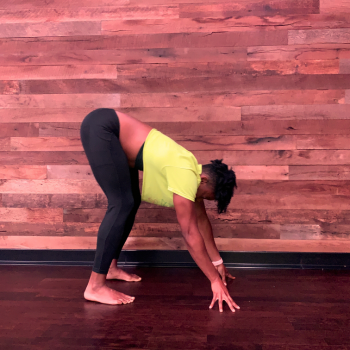 It’s not wrong to focus on having your hips high or trying to open your shoulders and straighten your knees. But those are secondary. The Bear serves a broader purpose.
The main objectives are:
- Improving the connection from your hands to your shoulder blades. This helps with strength and mobility in all reaching activities.
- Enhancing reciprocal cross-body movement, where the right hand moves with the left leg and vice versa. This automatically improves spinal mobility and stability.
Keep these intents in mind rather than fixating on whether your knees are straight enough or your shoulders are as open as the person in the video. Those are the main keys to success, and the knee and shoulder improvements will come along the way.
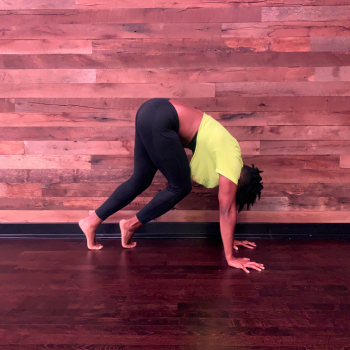 The Cross Step Bear variation is a great example. Adele maintains the exercise’s core concepts without needing a fully straight knee or hyper-flexible shoulders. Even the simple act of just pushing backward and moving in reverse emphasizes pressure through the hands, enhancing the whole-limb connection from fingers to shoulder blades.
The Monkey
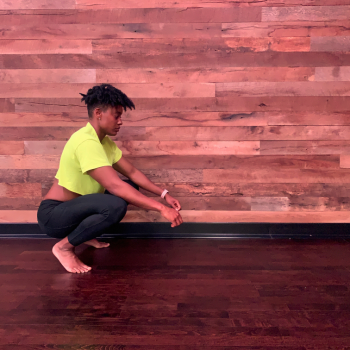 Watching someone perform the Monkey in a deep squat, transitioning fluidly in and out, you might think the deep squat is the point. It’s a great position to work toward, but the Monkey encompasses much more.
The main objectives are:
- Developing differentiation between the upper and lower body, which improves coordination and awareness, particularly in rotational movements. This is essential for throwing and racquet sports, and for any activity requiring quick changes of direction.
- Facilitating proper weight shifting, which improves the transfer of power between your lower and upper body and creates smoothness during transitions between movements in different directions.
Adele’s execution demonstrates how she maintains these concepts without needing to achieve the deepest squat possible.
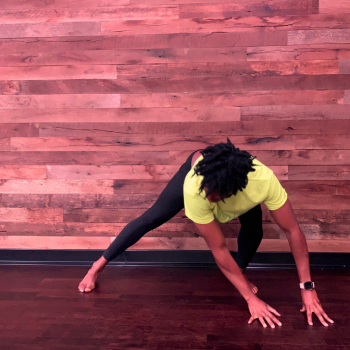 The Long Leg Monkey variation, extending the leg out to the side, further develops your ability to feel the weight shifts required for smooth, coordinated movement. It’s also a good example of why focusing on an external goal, like shifting your weight to a particular spot, produces better learning than thinking about which muscles should be firing.
The Frogger
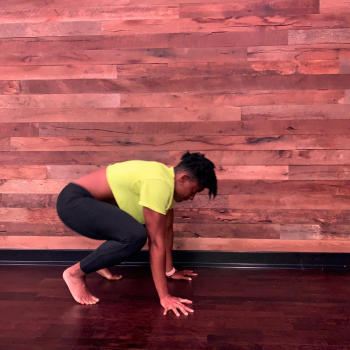 The Frogger is similar to the Monkey in that it emphasizes weight shifting, but the focus moves to forward and backward motion. This brings a different connection between your upper and lower body into sharper focus.
And just like the Monkey, the main goal has nothing to do with having the deepest squat or your heels flat on the ground. The positioning and movement should emphasize feeling the connection between the push through your hands and the lift of your hips as you move through space.
The main objectives are:
- Activating and coordinating your core muscles, particularly the abdominals and low back, during the hopping forward motion. The quick switching between primary movers is an important motor skill that applies across many different movement patterns.
- Exploring weight shifting in the forward and backward planes. Varying your hand positions and playing with where your weight sits, more on the heels, more on the balls of the feet, everywhere in between, gives your body valuable sensory information about balance and weight distribution.
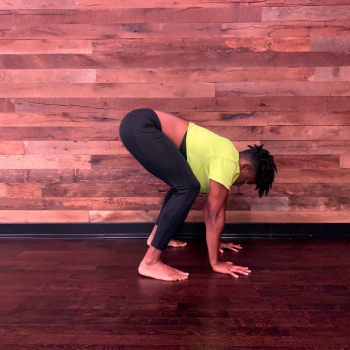 The Straight Leg Frogger variation takes you out of the deep squat position entirely, enabling a heightened focus on weight shifting.
This one is also particularly useful for developing the awareness you need in hand-balancing activities.
The Crab
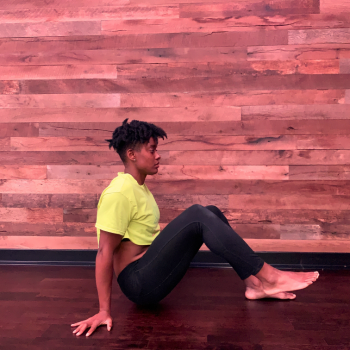 The Crab shares intentions with the Bear but in an inverted position.
Spending significant time pushing your hands behind your back with force is rare in daily life, which is exactly why this one can be surprisingly challenging at first. But it offers benefits that you can start experiencing even without big, expansive movement.
The main objectives are:
- Building strength and coordination with your limbs in extension as you reach behind you.
- Sensitizing yourself to weight shifts and transfers in this distinct position. Any activity where you need to push behind you, catch yourself, or push yourself up off the ground requires this awareness and capability.
Adele demonstrates a marching-in-place variation here, and the key is going slowly.
Feel the weight shifting throughout your body.
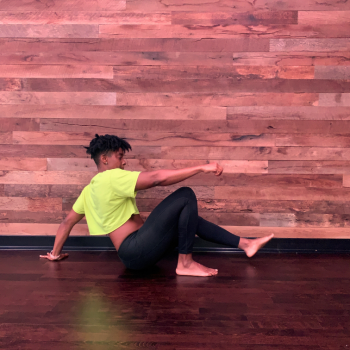 Pay attention to the pressure and sensations as you transfer weight from one hand and leg to the other. Just staying in place and shifting back and forth is a legitimate and useful starting point.
The Long Leg Crab variation adds anterior and posterior weight shifting, helping you adapt to movement in this position.
Play Is What Makes Locomotion Work
Learning the movements is valuable, but the real payoff comes when you start playing with them.
Play, in our context, means exploring and varying these movements at your current skill level, changing tempos, combining them, finding new ways to transition between them. You’re still using movements you’re comfortable with, but you’re introducing variability that your body has to figure out in real time.
This kind of exploration does several things at once. It develops range and control so you move better across all your activities. It builds joint durability, because your joints and connective tissues are being loaded through a much wider range of positions and speeds. It sharpens coordination, so you’re not the person who tweaks their back bending over to tie their shoes. And it makes training something you actually want to keep doing, year after year.
Don’t mistake fun for easy. This is problem-solving for your body. And it’s the piece that keeps people showing up consistently, which is the whole game.
An important note: if these movements feel awkward at first, that’s normal and it’s actually the point. The awkwardness is your body encountering positions and demands it hasn’t been conditioned for. That’s the stimulus that builds new capability. If everything felt smooth and familiar on day one, you wouldn’t be gaining much.
Building Capability With Your Whole Body
Locomotion exercise builds body confidence by giving you practical experience with movement patterns that conventional training leaves out. As you progress, you’ll notice something that goes beyond the exercises themselves: enhanced body awareness, better coordination, and a sense of control that shows up in everything you do physically.
Whether you’re picking up something heavy from an awkward angle, keeping up in a pickup game, or just getting down to the floor and back up without thinking about it, these are the qualities that make the difference.
In our Elements program, the Bear, Monkey, Frogger, and Crab are central, along with forward, backward, left, right, and combined variations of each. Elements builds them into a systematic practice, with structured progressions and built-in play sessions, so you’re developing strength, flexibility, and control together through these movement patterns.
Build a Confident, Capable Body
Elements encompasses full-body movement patterns to improve confidence in your ability to move smoothly, with control, through any range of motion.

Hi, I'm Jarlo Ilano PT, DPT 👋
Jarlo Ilano, PT, DPT, OCS has been a Physical Therapist since 1998. He earned his Doctorate of Physical Therapy in Musculoskeletal Management from Evidence In Motion, was board certified as an Orthopedic Clinical Specialist with the American Board of Physical Therapy Specialties, and is a certified Therapeutic Pain Specialist through EIM/Purdue University.
In addition to cofounding GMB, Jarlo has been teaching martial arts for over 30 years, with a primary focus on Filipino Martial Arts. He designed our Train Without Pain guide and our knee and shoulder restoration programs.