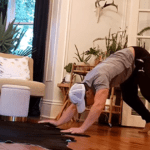
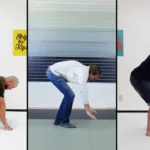
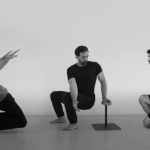
You already know that full-body exercises are the most efficient ways to improve how you move and feel. And if you’re not new to this, you’ve seen that getting down on the floor can be one of your best teachers.
Spend time with the fundamental crawls (the Bear, Monkey, Frogger, and Crab) and you’ll quickly understand how locomotion integrates the development of your strength, mobility, and coordination.
In our Elements program, they’re the foundation, but not the end.
We’ve developed dozens of variations of the “Big Four” to emphasize different aspects of physical autonomy: lower-body mobility, upper-body strength, core coordination, and more in a systematic progression within that flagship program.
The Big Four Fundamentals
🐻 Bear
Structure and shoulder integration
Strength and mobility in the overhead plane.
🐒 Monkey
Lateral control and agility
Freedom to move in the side-to-side plane.
🐸 Frogger
Upper and lower body connection
Core stability with lower body movement.
🦀 Crab
Endurance and extension
Total posterior chain integration.
They’re the core alphabet of locomotion: the foundation of Elements and the building blocks for everything that follows. If you haven’t built that base yet, it’s the best place to start.
But just like gaining fluency in any language, the next logical step is to broaden your vocabulary.
Beyond the Big Four: The Animal Rx Syllabus
 It’s important to explore how far your language of movement can go, because I guarantee that you can do much more than you think!
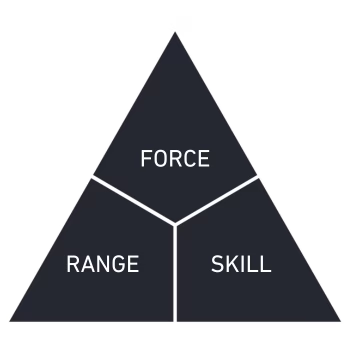
Through experimentation, refinement, and a lot of time on the floor, we’ve developed more than thirty new locomotion patterns, each one challenging strength, mobility, and agility to different degrees.
They’re grouped below by primary emphasis, but every pattern develops all three qualities to different degrees. The effect depends on you: your structure, your current capacity, and how you approach the work. For one person, the Ostrich might be a deep hamstring mobility drill. For another, it’s a strength challenge to maintain stability under tension.
That’s the essence of Praxis: movement that adapts to the mover.
Some of these movements evolve directly from Bear, Monkey, Frogger, and Crab, while others are brand-new explorations of how humans can move.
 Mobility-Focused: Dynamic Range
Butterfly
Duck Walk
Long-Leg Duck Walk
Egg Roll
Mermaid
Long-Leg Monkey
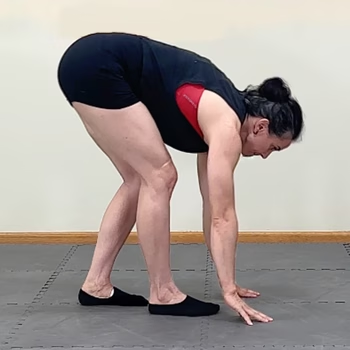
Ostrich
Penguin
Pigeon Walks
Quail
Unicorn
Worm Wave
 Strength-Focused: Force and Control
Alligator Walk
Cat Walk
Crab Toe Taps
Dead Bug
Drop Step Duck Walk
Horse Walk
Iguana
Jaguar
Inch Worm
Jackrabbit
Kangaroo
King Kong
Peacock Squat
Road Runner
Seal Walk
Slug
Tasmanian Devil
 Agility-Focused: Applied Skill
Armadillo
Bunny Hop
Gallop
Crocodile Roll
Forward Shrimp
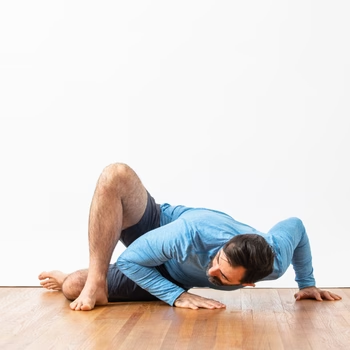
Koi Fish
Narwhal
Nautilus Roll
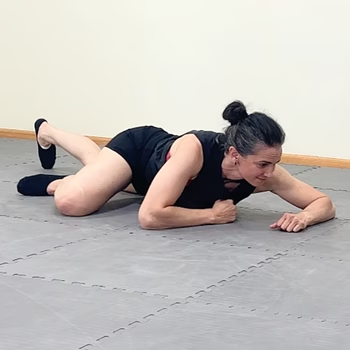
Newt Crawl
Octopus
Urchin
Scorpion Side Walk
Every one of these is a chance to see how well you can adapt in your movement, and each one blends strength, mobility, and agility. They teach you how to move with integrated, coordinated effort rather than arbitrarily separating them.
Real-life movement always requires integration!
Spotlight: Three Featured Crawls
Ostrich — Mobility Through Motion
View this post on Instagram
The Ostrich encourages functional mobility by teaching your hips and spine to share the work instead of guarding against it.
This intentional coordination does more than simple stretching can do. You’ll feel tension resolve as your motion becomes more natural and rhythmic.
Slug — Strength in Patience
View this post on Instagram
The Slug trains your upper body and core with its emphasis on integrating the full body in motion. You can’t not use nearly every muscle in your body while moving this way.
This unique pattern can challenge your pulling and core strength just as much as pull-ups!
Newt Crawl — Control in Rotation
View this post on Instagram
The Newt Crawl teaches you to rotate your hips freely under load while your upper body stays strong and supportive.
Keeping low to the ground encourages the development of hip mobility, and the arm positioning works both upper body pushing and pulling strength in this distinctive movement.
A mobile lower body with a strong upper body is one of the missing pieces for anyone who wants real-world mobility that transfers into daily life and sports.
How to Add These Movements to Your Routine
You can easily fit this into your training by using the Praxis Protocol (the 5Ps):
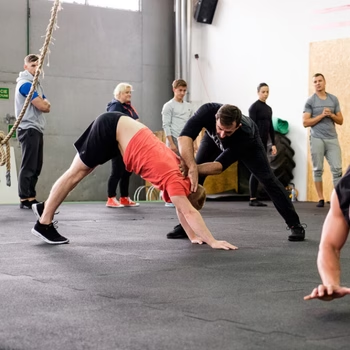
- Prep: Prime your joints with warm-up exercises.
- Practice: Focus on a handful of new patterns.
- Play: Connect a few patterns together; explore transitions.
- Push: Increase challenge through time, range of motion, and intensity.
- Ponder: Reflect on what felt solid and what surprised you.
You don’t need to add hours of additional training. A couple of short sessions a week is enough to make these movements part of how you move, not just what you train.
But if you want a clear way to know which patterns will serve you best right now, that’s exactly what Animal Rx is for.
The Next Steps for Your Movement Fluency
 Every body moves differently. Your mobility, your strength, even how your joints feel on any given day; all of that changes what you actually need from your practice.
That’s why Animal Rx begins with a short guided assessment that reads how you’re moving right now.
Animal Rx then prescribes a personalized shortlist of movements that balances what’s strong with what needs attention.
If your hips need more mobility, you’ll get patterns that open and stabilize them. If your upper body lacks endurance, you’ll see more crawls that build shoulder control and integration. Work your prescription for a couple of weeks, reassess, and it evolves as you do.
Learn Animal Movement Exercises for Any Training Goal
If you want more variety to target specific goals, check this out:
Animal Rx
Fix what’s slowing you down with movements picked for your body. A 3-minute assessment finds your weak links and prescribes the exact exercises to address them from 47 total tutorials.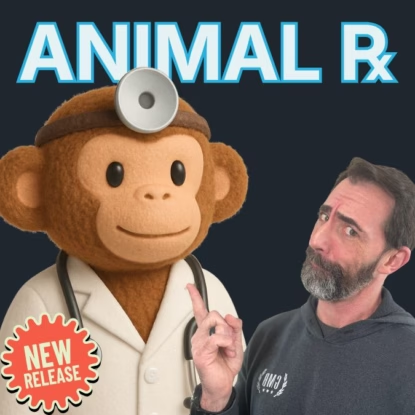

Hi, I'm Jarlo Ilano PT, DPT 👋
Jarlo Ilano, PT, DPT, OCS has been a Physical Therapist since 1998. He earned his Doctorate of Physical Therapy in Musculoskeletal Management from Evidence In Motion, was board certified as an Orthopedic Clinical Specialist with the American Board of Physical Therapy Specialties, and is a certified Therapeutic Pain Specialist through EIM/Purdue University.
In addition to cofounding GMB, Jarlo has been teaching martial arts for over 30 years, with a primary focus on Filipino Martial Arts. He designed our Train Without Pain guide and our knee and shoulder restoration programs.