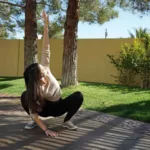
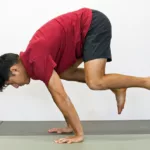
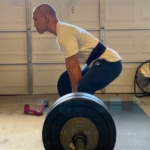
David Eriksson was 20 years old and already a serious powerlifter when he looked around his gym and noticed something that bothered him.
Nobody there was over 35.
 Injury after injury among his training partners. Guys who’d been strong as hell a few years earlier, now nursing wrecked shoulders and blown-out backs. The trajectory was obvious: train this way long enough and your body stops cooperating.
David didn’t want that future. He was in Helsingborg, Sweden, about to start studying Sports Science, and he had a clear picture of what he actually wanted from training: “My long-term goal was to free my body and be able to show strength, flexibility, and body control in everything I do.”
Powerlifting wasn’t going to get him there. Neither was training harder. He needed to train differently.
That search led him to GMB, and he started with Elements. What happened over the next eight weeks changed how he thinks about training entirely.
Going Through the Motions (The First Time)
David has gone through Elements twice. The first time, he was still a weightlifter at heart — “looking to put more kilos on my lifts.” The idea of mindful practice was completely foreign to someone whose training had always been about pushing as hard as possible, every session.
He wasn’t very focused, especially in the early weeks. He went through the motions because the movements looked basic and he figured the real work would come later.
It wasn’t until near the end of the program that something clicked.
“The more knowledge I gain about physical autonomy, the more I recognize the brilliance of bear, monkey, and frogger. It’s not just hopping forward or to the side. It’s about self-knowledge, getting to feel how it is being in control of your body, and controlling it mindfully. That realization changes you and develops a bulletproof mindset.”
The Second Time Through Changed Everything
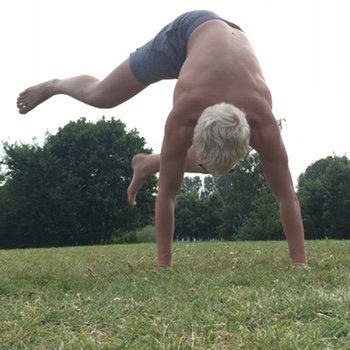 With that shift in understanding, David ran Elements again. Completely different experience.
“The second round has been much more mindful and focused, and I approached it as just as important as my ring training and floor training.”
He kept his practice sessions within the recommended 3-5 minute focused sets. “I never went over because that allows you to be more focused. It really works.”
The results showed up in three areas he wasn’t expecting.
Flexibility Without Trying to Get Flexible
“I think I gained more flexibility from Elements and the locomotive exercises than from stretching,” David said. The surprising part: “You don’t think about increasing flexibility when doing these moves. You just do the moves, focusing on them, and bam — increased flexibility.”
This is how locomotor training works. When you practice moving through positions with control and attention, your body opens up range it needs to complete the movements. The flexibility comes as a byproduct of skilled practice, which means it’s functional range you can actually use — not passive flexibility that disappears the moment you need it under load.
Movement Quality That Transferred to Everything
“The ease of movement and motor control translates into absolutely everything. That’s how it’s marketed and I was skeptical — I didn’t think it would apply to absolutely everything. But it does.”
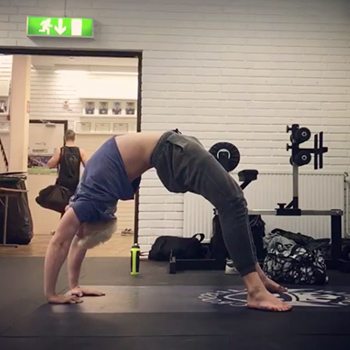 After Elements, David moved into rings training. He posted in our Alpha Posse coaching group asking how to get his heels closer to his butt in a tuck shoulder stand. Our coach Chris answered: “Bear walks.”
“Even though I had gone through Elements once at that point, I was like, ‘Come on, Chris… It’s not the cure for cancer…’ But you know what? It helped. Of course it did.”
The basic locomotor patterns build motor control that shows up in more advanced skills — sometimes in ways that aren’t obvious until you experience it. David went on to earn a strict rings muscle-up and a full drop to backbend, built on the foundation those “simple” movements created.
A Complete Mindset Shift
“I think the most valuable thing was not physical at all, but mental. It really made me realize my weaknesses and opened my eyes to see what’s important and what I need to focus on. It pointed me in the right direction.”
For someone who’d spent his training life measuring progress in kilos on the bar and sweat on the floor, that’s a fundamental reframe. David went from “how hard did I push today” to “how well did I move today” — and the physical results actually got better because of it.
Why This Matters If You’re Not 20
David saw the writing on the wall at 20. The empty spots in the gym where the over-35 crowd should have been told him everything he needed to know about where intensity-only training leads.
If you’re already in your 30s, 40s, or 50s, you don’t need to imagine that future. You might be living some version of it — strong in specific ways, but stiff, sore, and aware that your body doesn’t move the way you want it to.
The same approach that helped a young powerlifter build the movement foundation he was missing works for someone who’s been training for decades and skipping the basics the whole time. David’s flexibility gains, his motor control improvements, and especially his shift toward training with attention and purpose — those results scale regardless of age or starting point.
“I would recommend Elements to absolutely every single person alive. People move like crap. We know that. Everyone needs this very basic approach and mindful approach to movement. It’s absolutely awesome to just move. If someone, regardless of age, asked me where to begin, I would point them to Elements. This is where it begins.”
Build the Movement Capability You Actually Need
Elements builds strength, mobility, and body control together through progressive locomotor training — wherever you’re starting from.
Hi, I'm Andy Fossett 👋
A lifelong martial artist and former schoolteacher, Andy’s deeply concerned with autonomy and fitness education. As CEO of GMB Fitness, he’s dedicated to providing an open, accessible culture for both clients and staff to enjoy exploring more of what they’re truly capable of.
He's best known for his wildly off-topic rants on the GMB Podcast and spends the majority of his time eating burgers, sipping bourbon, and reading books.