
Burpees earned their bad rap.
The movement itself is fine. The problem is what we’ve done to it. Somewhere along the way, the burpee turned into a badge of suffering, a shortcut to exhaustion, the drill sergeant of bodyweight training: loud, demanding, and mostly good for making you feel like you did something.
Strip away the hype and what you usually see is a mess. Ugly jumps, a collapsed push-up that’s more of a chest flop, and no intention behind any of it. Just motion for the sake of burning calories and getting tired.
We’ve spent decades teaching people to move well, and we can do better than that.
TL;DR: Here’s What You Should Remember
- Burpees are fine. Sloppy burpees are the problem.
- Start with a strong squat and plank.
- Do one beautiful rep. Then repeat it.
- Play with variations and make it your own.
- Make it hard but fun.
When movement feels good, you’ll keep doing it. And when you keep doing it, you’ll keep getting better.
🎥 Watch: How to Make Burpees Suck Less (Seriously)
In this video, we show how most people butcher burpees, then rebuild the movement into something that builds strength, coordination, and control.
The Core of a Better Burpee: Squat + Plank
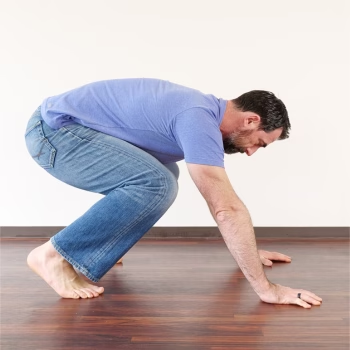
Build your burpee from clean, strong shapes
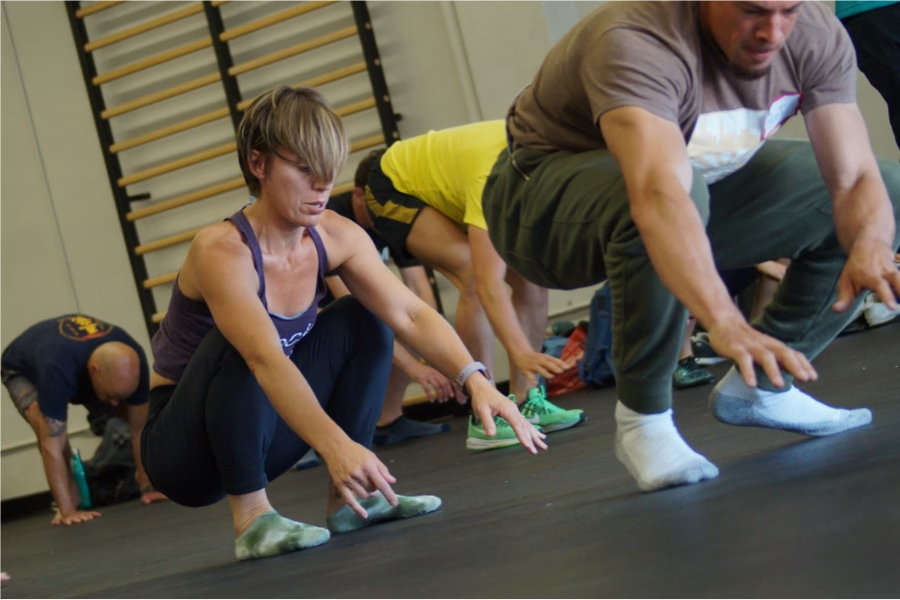
At its most basic, a burpee is a squat and a plank: two foundational positions that show up in every kind of training, from calisthenics to martial arts to physical therapy, and every P.E. class.
Treat that combo like a skill instead of a punishment, and you get something that builds:
- Strength and stability
- Full-body coordination
- Practical athleticism
That beats making yourself tired. So skip the ten sloppy reps and focus on one perfect rep.
A full, grounded squat → A smooth transition into a strong plank → Lather, rinse, repeat.
Do one perfect rep as pretty as you can, and then repeat it.
We aren’t trying to turn burpees into yoga! We want a version that improves how you move, so you’re stronger on the trail, more stable carrying stuff around, and quicker chasing your kids across the yard.
Skip the Flop, Keep the Strength
Now let’s talk about the extras, specifically the push-up and the jump.
There’s a weird assumption that a “real” burpee has to include both. That standard is arbitrary.
 If you can’t do a proper push-up with control and alignment, throwing one into a fast burpee just reinforces bad habits. Same goes for the jump: most people land poorly, jarring their joints and aggravating old issues or creating new ones.
So don’t force it. Start with what you can do well.
Practice Tip: Build a Better Burpee in 3 Steps
- Start with a bodyweight squat. Deep, stable, heels down.
- Step back into a plank. No sagging hips, no shrugging shoulders.
- Step forward. Stand tall. No need to jump.
Work on just 3–5 reps like this and see how it feels. Focus on feeling each position rather than rushing through. Build the base and let the extras come naturally. When you can add the jump or the push-up with quality, add them. Just don’t let them define the movement.
Quick Answers
- Do I have to jump? Nope. Only if you can do it well and land safely.
- Is it still a burpee without a push-up? Yes. Plank + squat = solid foundation.
- Can I do this every day? Start slow. 3–5 quality reps, a few times a week, goes a long way.
Make the Burpee Your Own
When you stop thinking of the burpee as a fixed exercise and start thinking of it as a movement combination, everything changes.
Suddenly, you’ve got options.
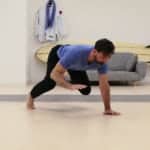
One of my favorites is what we call a “roller burpee,” where you flow into a roll and back into the squat. It’s more fun, and it’s more athletic.
View this post on Instagram
That squat-plank-squat sequence becomes a template for exploration. You can add in:
- Rolls
- Crawls
- Side sits
- Single-leg transitions
- Flowing sequences
The burpee doesn’t have to be rigid, and better practice beats more punishment every time.
Personalize It Like a Pro and Turn Weaknesses Into Wins
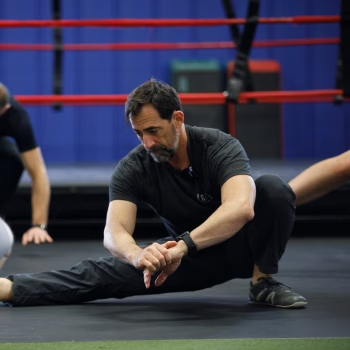
Explore movement that works for your body
Burpees don’t have to be one-size-fits-all. In fact, they shouldn’t be. Use the squat-plank base as a starting point, then plug in what you need: a lateral step for more hip strength, a slow eccentric into the plank for shoulder control.
Our way is a starting point. Learn to trust yourself.
This personalized approach also reveals your weaknesses and gives you a way to improve them. If you can’t get into a full squat right now, that’s your work for a while. If your plank wobbles, you’ve found your foundation project.
Masking weak spots with momentum keeps them weak. Acknowledging them and getting to work is how you get stronger, more mobile, and more resilient in daily life as well as the gym.
Train to Move Better, Not to Get Tired
 This mindset shift goes beyond form. You’re doing this to get better at life, and the exercise is just the vehicle.
When you move with intention, explore variations, and get curious, exercise stops being punishment and becomes a practice: a way to get a little better every day.
- Rushing the descent
- Letting the hips sag in plank
- Landing hard with no control
- Turning burpees into a cardio test instead of a movement practice
Start where you are. Do one beautiful rep and let that be enough today. Repeat it tomorrow. That’s how you build something real, in your body and your head.
You stop chasing exhaustion and start building capability.
That’s what we’re after.
Triple Shot: Complete Conditioning for Health & Performance
Triple Shot is conditioning built the same way: purposeful, playful movements that carry over to everything you care about. You’ll get tired, sure. You’ll also get better.

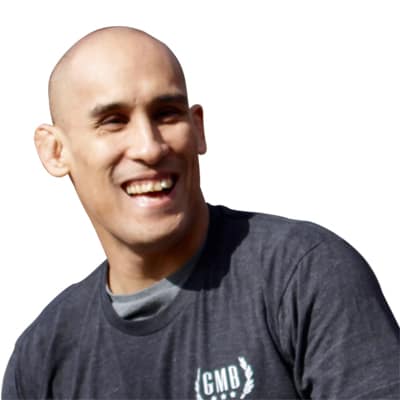
Hi, I'm Jarlo Ilano PT, DPT 👋
Jarlo Ilano, PT, DPT, OCS has been a Physical Therapist since 1998. He earned his Doctorate of Physical Therapy in Musculoskeletal Management from Evidence In Motion, was board certified as an Orthopedic Clinical Specialist with the American Board of Physical Therapy Specialties, and is a certified Therapeutic Pain Specialist through EIM/Purdue University.
In addition to cofounding GMB, Jarlo has been teaching martial arts for over 30 years, with a primary focus on Filipino Martial Arts. He designed our Train Without Pain guide and our knee and shoulder restoration programs.