
Stand up straight! Stop slouching!
Most of us have heard that since we were kids. And did all that childhood trauma result in perfect posture? Probably not.
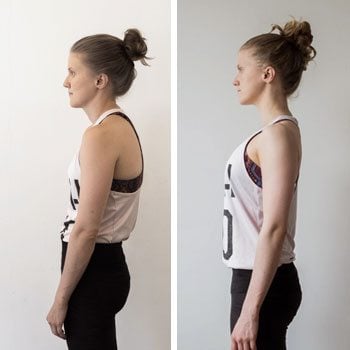
There’s a strong market out there devoted to various devices, straps, and apps that promise to fix your posture. And I get the appeal. Standing tall does look and feel better.
But after 27 years of clinical practice and seeing thousands of patients who were convinced their posture was the problem, I can tell you this: what most people think about posture is wrong. And the things they’re doing to “fix” it are mostly a waste of time.
The good news is that what actually works isn’t complicated. It just requires a different way of thinking about the problem.
Good Posture Has Real Benefits (Just Not the Ones You Think)
Let me be clear: I’m not saying posture doesn’t matter. It does.
There’s solid evidence that standing taller is associated with feeling more confident, being perceived as more competent, and even some hormonal changes.
These are real effects.
And for active movements, alignment matters a lot. When you’re slumped forward, it’s simply harder to lift your arms overhead, let alone a heavy weight. An elevated chest and pulled-back shoulders puts you in a better position to transfer strength and power. That’s why so much time in sports training is devoted to proper technique.
So posture is worth caring about. The question is how you go about improving it.
The Two Big Posture Myths
Myth #1: There’s an “ideal” posture everyone should aim for
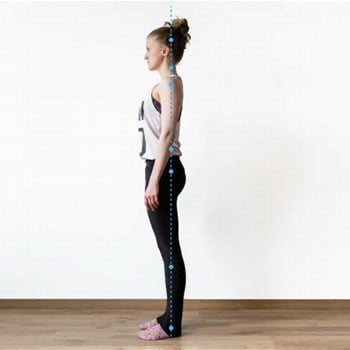
You see this everywhere. Military posture with the chest puffed out and chin tucked to the extreme. Trademarked systems that advocate very specific angles for your spine and shoulders, each claiming to be the one correct answer.
But there is no evidence that a single set position works for every body. We have different anatomies, different histories, different demands on our bodies. I’ve treated patients with textbook-perfect alignment who were in constant pain, and patients with posture that would make an orthopedist cringe who felt absolutely fine.
Our bodies are dynamic systems that adapt well to a variety of environments. You’ll find very healthy, high-performing people across a wide range of body types and habitual postures.
Myth #2: Poor posture causes pain

This one is deeply ingrained. But particular postures don’t directly cause pain. If they did, everyone who regularly slouches would hurt, and everyone who stands straight wouldn’t. We both know that’s not true.
Pain is complex. It involves anatomy, personal history, emotional state, environment, and a lot of other factors. Research consistently shows that habitual standing posture varies widely between people with and without pain, so we can’t rely on posture alone to predict who will hurt and who won’t.
And those posture-correcting gadgets you’ve seen on social media? While they might change your positioning, studies suggest they don’t actually reduce pain that people attribute to poor posture.
So if it’s not about forcing yourself into a “correct” position, what is it about?
Posture Tolerance: The Concept That Actually Matters
Here’s how I think about it after decades of treating patients: posture isn’t a position you hold. It’s a capacity you build.
I call this posture tolerance — your ability to maintain different positions for sustained periods with relative comfort. And it explains a lot of confusing situations.
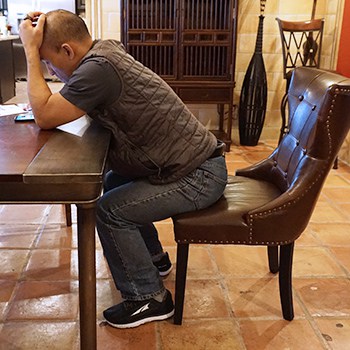
Say you work at a desk 10 hours a day. Your body has adapted to the seated, flexed position. Then you stand up and walk around for 30 minutes and your lower back starts aching. Your posture while standing might look fine. The problem isn’t that you’re standing wrong. It’s that you’ve spent so long in one position that your body has become less tolerant of the other.
This works in reverse, too. If you’re on your feet all day and then sit down for a long stretch, you might get uncomfortable. Even if your seated posture is textbook-perfect.
Your body adapts to what you do most. The less time you spend in certain ranges of motion, the weaker your ability to sustain those positions becomes.
Here’s what my colleague Steven Low, author of Overcoming Gravity, has to say about it:
“The best way to ‘fix’ problematic postures is to build strength, control, and endurance in and out of the posture. Most different postures are only uncomfortable because you are not comfortable moving in and out of them as the body has built a ‘habit’ of being in a specific position. To break that habit you need a movement and strength focused routine to get comfortable with less problematic postures.”
That sums it up well. The fix isn’t to force a position. It’s to build the capacity to move freely between positions.
Two Quick Self-Assessments
Before you start doing exercises, it helps to understand where your tolerance gaps are. These two tests take about 30 seconds each, and they’ll tell you which direction to focus your effort.
Assessment #1: Extension (Standing Tolerance)
Stand up, lift your chest, and bring your arms overhead. Reach as far up and back as you can. Then lean back slightly and notice how it feels.
Rate how easy this is on a scale of 1 to 10. One means this is hard and uncomfortable. Ten means you could do it all day.
This correlates with how well you handle extended periods of standing and walking. If you scored low, you’re extension intolerant, which is common for people who sit most of the day.
Assessment #2: Flexion (Sitting Tolerance)
Sit on the floor with your legs in front of you and lean forward as far as you can. Don’t worry about keeping your back or legs straight. Just see how it feels.
Rate this on the same 1-to-10 scale.
This correlates with how well you handle prolonged sitting and squatting. If you scored low, you’re flexion intolerant, which is more common among active people who spend most of their time upright.
You might score low on both. Most people favor one side, though.
Exercises That Actually Help
Based on your assessment, here’s where to focus. These aren’t about “correcting” your posture into some ideal alignment. They’re about building your body’s capacity to handle positions it’s currently struggling with.
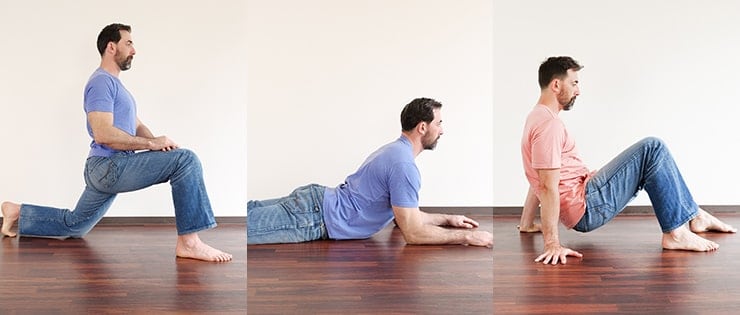
If You’re Extension Intolerant
These three movements will help you get more comfortable with being upright, open, and extended:
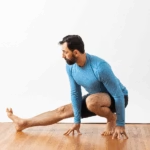
- Kneeling lunge — Keep your chest tall and tuck your tailbone under to get proper pelvic positioning. Lunge forward gently, maintaining that tall posture throughout.
- Cobra — Lift with your chest, scooping forward and up. Think about lengthening as you extend backward. Don’t crunch your neck.
- Crab — Sit with knees bent, hands behind you. Push through your hands, lift your chest and hips, and traverse forward and back. Think tall and open.
If You’re Flexion Intolerant
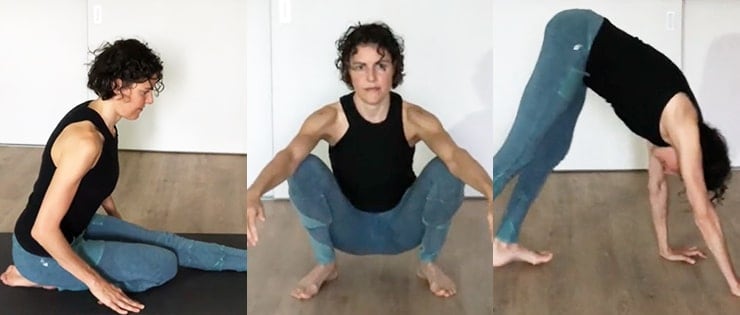
These three movements build your comfort with bending, folding, and being in flexed positions:
- Hamstring stretch — Use a chair for support. Hinge forward at the hips, keeping your back flat, and fold over your extended leg.
- Supported squat — Hold a sturdy table or chair. Keep your knees apart, let your tailbone tuck under, and fold your chest toward your knees.
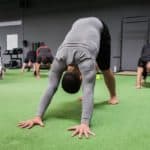
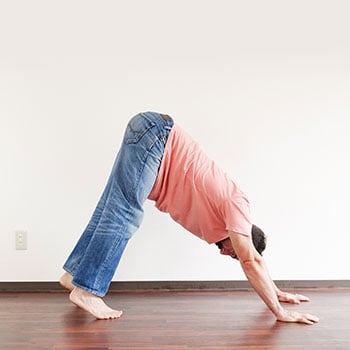
- Bear — On all fours, push your hips toward the ceiling. Shrug into the floor through your hands and think about lengthening from heels to hips and from hips to fingertips.
A Quick Daily Reset (Especially for Desk Workers)
If you spend most of your day at a computer, these two movements are worth learning. They take about five minutes and directly counteract the hunched, internally-rotated position that accumulates over hours of desk work.
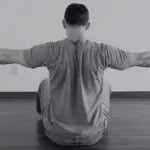
- Twisting Bear — Decompresses your spine and moves your shoulders through a range of motion they almost never see during desk work. It builds rotator cuff stability while opening up the chest and side body.
- Three-Point Bridge — Opens the front of your body, rotates the spine gently, and extends the hip flexors that get shortened from prolonged sitting.
A few repetitions of each, two or three times throughout the day, makes a real difference. They won’t undo 12 hours of sitting by themselves, but they buy you back a significant amount of the movement capacity that desk work takes away.
Exercises Are a Start. A Movement Practice Is the Fix.
Frankly, I’ll give it to you straight: a handful of corrective exercises isn’t enough if the other 23 hours of your day are working against you.
Posture is a habit, and habits are built by what you do regularly. People who maintain good posture do it because of how they move throughout their lives, not because they’re constantly thinking about pulling their shoulders back.
Changing postural habits requires patience. It requires building strength, mobility, and control across your whole body, not just targeting one “problem area.”
Sure, if you need to build core strength (you do), do that, but do so in a holistic manner – your body is not just a collection of parts.
And if you train with enough consistency that your body starts defaulting to better positions because it has the capacity to sustain them… that’s when you’ll see the effects on better posture.
I’ve seen this over and over in my practice: the people who see lasting improvement aren’t the ones doing 10 minutes of stretches before bed. They’re the ones who’ve built a regular movement practice that continuously challenges and expands what their bodies can do.
What Our Clients Say
We hear from people all the time who came to us because of posture-related issues and found that a consistent movement practice changed things in ways that targeted exercises alone never did.
“I used to wake up with a stiff neck and shoulders every day but after about two weeks of Elements that pain has disappeared. I wish I had known about this program 20 years ago.”
“I sit a lot at work all day. It’s made a significant improvement in my lower back pain and my ability to sleep well at night. I have only been using the program for about 15 minutes on most days for about 3 weeks.”
“Because I work at a desk, I had backaches that just wouldn’t go away. I tried doing YouTube exercises, went to massages and even got another chair, but nothing changed. After around 6 months of doing Mobility and Elements, my back pain is gone.”
“I am a very sedentary person (IT worker). Once a year I try to complete Elements and each time I feel much better. Throughout the program, I felt a gradual easing of movement and limbs. My posture improved and minor aches went away.”
See more client results and reviews.
Build the Strength and Mobility That Makes Good Posture Automatic
📖 Want to go deeper on the science? I co-authored Overcoming Poor Posture with Steven Low, author of Overcoming Gravity. It covers the full assessment and exercise system in detail, including specific protocols for common postural issues. Get your copy here.
Posture References

Hi, I'm Jarlo Ilano PT, DPT 👋
Jarlo Ilano, PT, DPT, OCS has been a Physical Therapist since 1998. He earned his Doctorate of Physical Therapy in Musculoskeletal Management from Evidence In Motion, was board certified as an Orthopedic Clinical Specialist with the American Board of Physical Therapy Specialties, and is a certified Therapeutic Pain Specialist through EIM/Purdue University.
In addition to cofounding GMB, Jarlo has been teaching martial arts for over 30 years, with a primary focus on Filipino Martial Arts. He designed our Train Without Pain guide and our knee and shoulder restoration programs.