
 Nobody really cares about tight hamstrings.
Until they’re stopping you from doing things you need or want to do — getting low to pick something up, kicking, running, sitting on the floor without your back rounding into a question mark.
Tightness down the back of your legs is common, whether it’s from sitting too long, an old injury, or just the way it’s always been for you. The cause matters less than what you do about it.
The techniques below will work whether your hamstrings have been tight for years or months. They’ll also work if every other approach you’ve tried hasn’t.
⏳ Short on time? No problem.
Two options:
👉 Skip to the hamstring stretches below
👉 Or have us email you our 15-minute full-body routine that works your hamstrings alongside everything else that might be tight.
Why Your Hamstrings Feel Tight (And Why It’s Often Not Your Hamstrings)
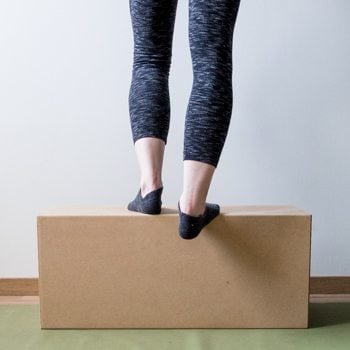 Your hamstrings might not actually be the problem.
That sounds counterintuitive when the back of your legs feels like a guitar string, but in the clinic, “tight hamstring” complaints regularly trace back to other parts of the posterior chain pulling tension into the area. Especially if you sit or drive for long stretches.
A few of the usual suspects:
- Your calves (gastrocnemius) cross the knee joint, so restrictions there can make keeping your knees straight harder than it should be.
- Your deep hip muscles (glutes, piriformis, gemelli, etc.) affect how easily your pelvis tilts, which directly affects your forward bend.
- Joint restrictions in your lower back and pelvis can refer tension throughout your hips and legs. People often feel much freer in their forward folds after limbering up the spine, with no hamstring stretching at all.
- The sciatic nerve runs from your low back all the way down your leg, and nerves can be sensitive to stretch in ways that feel exactly like a “tight muscle.”
It’s usually some combination of all of these. That’s why isolated hamstring stretching plateaus for so many people.
Yes, your hamstrings can be genuinely tight. They’re also one piece of a bigger picture, and full-body work tends to outperform hamstring-only stretching for almost everyone. Our approach takes that into account.
6 Hamstring Flexibility Tips That Actually Work
There are dozens of things you could do to loosen up your hamstrings. Most of them are minor. These six are the ones that consistently move the needle.
1. Never Force a Stretch
You’ve heard this before. You’ve probably ignored it. Most people do. Here’s why it actually matters.
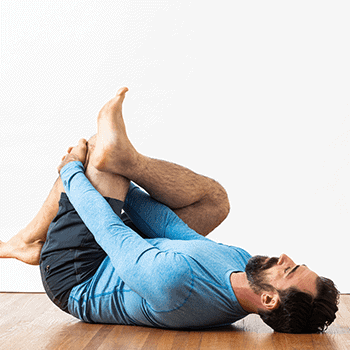
Your muscles and nerves aren’t passive structures when you stretch them. Stretching too forcefully or too quickly activates a “stretch reflex” — your nervous system increases muscle tension as a protective response and resists the stretch you’re trying to do. You’re literally telling your body to pull harder against you.
This is why gentle, consistent stretching beats heroic sessions for almost everyone.
What to try instead:
- Pick a stretch and rock slowly into and out of it.
- Breathe evenly while you do it.
- Every few reps, hold for a few seconds and check where you’re at.
After 30 seconds or so, you’ll usually find yourself further into the stretch with less strain than when you started.
2. Bend Your Knees
 Yup, go ahead. It’s fine.
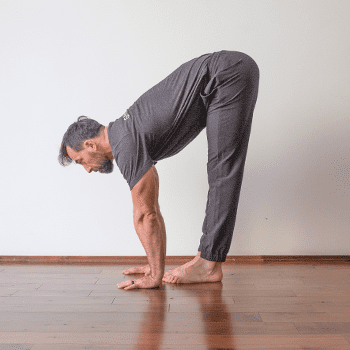
Forward folds with straight legs are useful when you can do them comfortably. If you’re locking up a few inches into the motion, the straight-leg version is fighting you. Bend your knees, take the slack off the calves and the hamstring attachments at your knees, and focus on a flat back hinging from the hips.
You’ll get more useful work done with bent knees and good posture than with straight legs and a rounded back.
3. Loosen Up Other Areas First
 Your hamstring tightness is often coming from somewhere else.
Before doing dedicated hamstring work, loosen up the rest of the chain: back flexibility exercises, hip mobility stretches, and calf stretches.
Most people notice freer hamstring motion immediately, without having stretched the hamstrings at all.
4. Keep Static Holds Short
 Holding a stretch longer than 15 to 30 seconds doesn’t add much. The first 15 to 30 seconds is where most of the immediate stretch tolerance gain happens. Beyond that, you’re mostly waiting around.
Shorter holds with more repetitions tend to work better, especially when you’re starting out. Build up to longer holds for specific issues later, once you have a baseline practice in place.
5. Move in the New Range
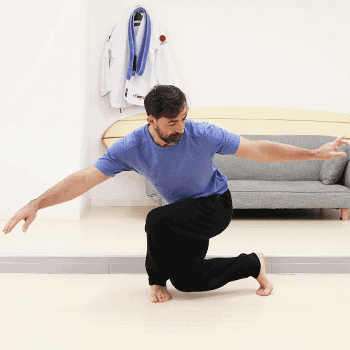 Flexibility gains from a single stretching session often disappear by the next time you train. The cause is simple: you accessed a new range, but you didn’t move in it. Your body returned to default.
Range of motion sticks when you re-educate your body to use the new range. Move into it, produce force in it, do real work there. Dynamic exercises like deep squatting, leg swings, full-range kicking, and controlled jumps teach your body that the new range is real.
Keep the intensity low at first and well within your control. And skip prolonged stretching right before heavy training — it temporarily reduces strength and stability, which is the opposite of what you want before a hard session.
6. Pick One Method and Stick With It
 The five tips above are the highest-leverage principles. There are plenty of other approaches and gadgets you’ll find — foam rollers, balls, bands, branded stretching protocols. None of them are inherently bad.
The mistake is using all of them at once.
If you stack five methods on top of each other, you can’t tell which one is working, which one is doing nothing, or which one might be quietly setting you back. Pick a method, apply it consistently for a couple of weeks, and watch what changes. One thing at a time.
Hamstring Stretches You Can Do Today
With those principles in mind, here are some practical hamstring stretches you can use right away.
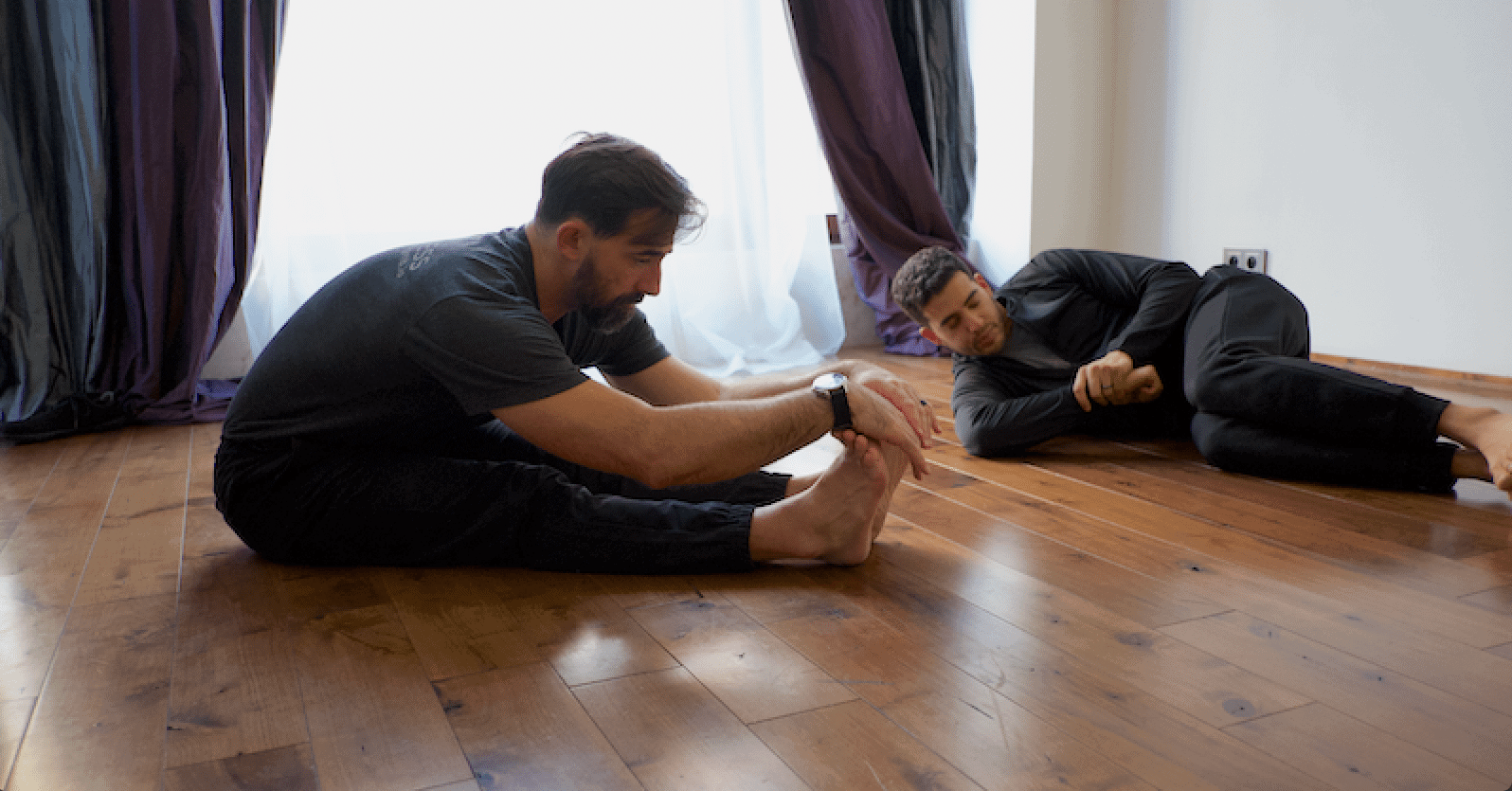
The first video shows fundamental hamstring stretches that just need an elevated surface — a bench, a chair, a table, anything sturdy enough to rest your foot on. Apply the rocking-into-and-out-of-stretch approach from tip #1, followed by a short hold at the end.
🎁 Get our 15-minute routine that’s helped thousands of people loosen all their major joints and muscles. Yours free. Just tell us where to send it.
Pick one variation to start with. Get comfortable with it before adding others.
If standing creates too much strain on your hamstrings or back, the second video walks through seated variations with modifications.
Improving hamstring flexibility comes down to gentle movement in ranges that work for your body, repeated consistently. The painful, white-knuckle approach is what people try when they don’t know better, and it doesn’t actually deliver.
The Faster Path to Looser Hamstrings
Loose hamstrings feel good. If they’ve been tight for a long time, the first signs of progress are a real relief.
The tips above plus the stretches in the videos will get you moving in the right direction. The faster path is full-body work, because the hip mobility, calf range, and spinal motion supporting your hamstrings are usually the real story behind “tight hamstrings.”
That’s why most of our clients start with Elements. It builds all of those pieces together in a structured practice you can return to consistently — not a six-week sprint that ends with you back where you started.
Natasha used Elements to reclaim the flexibility she needed after years of training. 👇

Elements will always hold a special place in my heart, as it was the beginning of a new way of looking at movement and exercise, and branching away from the gym mentality. Elements allowed me to move anywhere and brought movement play into my life. It was a revelation, it felt so liberating and free.
The best thing was the focus on feeling good and moving better, instead of on my appearance. I have a bit of a history of eating disorders and being a bit obsessive about my weight - Elements changed that and brought a calmness to me about these issues. I trusted the process and didn't obsess about trying to "burn more calories.” Instead, there was a sense of fun and amazement over the potential of what my body can do, regardless of age.
When I started Elements, I thought I was quite a fit person - my gym workouts also focused on posture and moving better, I always warmed up and cooled down - however I had so many niggles that I just thought were a part of life! My hips became more mobile and my squat deepened and became more comfortable, my hamstrings more flexible, my shoulders strengthened, and I found more mobility in my right shoulder which had been giving me issues after a mountain biking accident.
I also started my handstand journey and rediscovered yoga, both of which bring me "proprioceptive joy" on a daily basis.
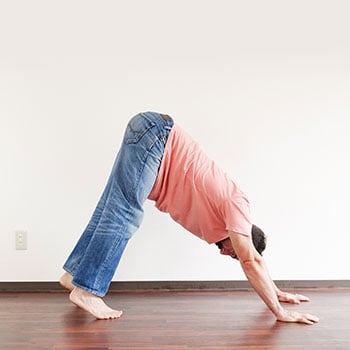
Already training and just need the focused mobility component? GMB Mobility is purpose-built for that.

Hi, I'm Jarlo Ilano PT, DPT 👋
Jarlo Ilano, PT, DPT, OCS has been a Physical Therapist since 1998. He earned his Doctorate of Physical Therapy in Musculoskeletal Management from Evidence In Motion, was board certified as an Orthopedic Clinical Specialist with the American Board of Physical Therapy Specialties, and is a certified Therapeutic Pain Specialist through EIM/Purdue University.
In addition to cofounding GMB, Jarlo has been teaching martial arts for over 30 years, with a primary focus on Filipino Martial Arts. He designed our Train Without Pain guide and our knee and shoulder restoration programs.