
Most people who find GMB aren’t total beginners.
They’ve trained and been on lots of programs and know how to work hard and push through when things get tough!
On paper it looks like they’re doing all the “right” things, but often there’s a nagging sense that something is missing. Especially when the initial progress slows down to a crawl and small aches start hanging around longer than before.
Nothing is dramatically broken, but things are just a little off. That’s usually when people try to fix the problem by adding more; more load, more intensity, more exercises.
And that can work. For a little while anyway.
But lifelong capability doesn’t come from endlessly adding things on.
You need to build the right capacities in the right way, knowing how to shift emphases as your body changes. That’s at the heart of the GMB Praxis method.
Why “Doing More” Stops Working
 In most fitness thinking, progress is easy to define. Just keep adding more. More weight on the bar, more intensity in your workouts, and more advanced exercises. There’s nothing inherently wrong with that. We don’t improve by staying comfortable.
The issue is when adding more becomes your only strategy. Over time, increasing loads linearly will outpace your ability to recover. We absolutely need progressive change, and our bodies can adapt to almost everything, but that doesn’t happen through force and willpower alone.
When this becomes the default approach; fatigue builds faster, movement quality slowly degrades as you chase one more rep or one more round, and the margin for error gets thinner without you really noticing.
This is why people can feel both fit and fragile at the same time.
GMB Praxis takes a different view of progress. Instead of focusing only on output, it emphasizes:
- Expanding your usable movement options, so your strength and mobility actually show up in daily life and sport
- Improving body control and awareness, especially in positions and transitions that used to feel unfamiliar or unstable
- Staying capable across decades, not just through the next training cycle
The goal isn’t to force progress by constantly adding more and hoping your body keeps up.
Real progress comes from building capacity in a way that compounds, where each phase supports the next not just held together by grit alone.
The Big Picture: How Praxis Organizes Progress
 One of the biggest reasons people stall out is that their training has no real structure beyond “do harder things over time.” And this makes sense, because we’re conditioned to think that if you aren’t always pushing to improve, you’re lazy or unmotivated.
Nobody wants to be accused of that.
So programs often rely on stepwise progressions built as isolated solutions: a strength phase, a mobility fix, a conditioning block. You run one, then jump to the next, hoping it fills the gap the last one exposed.
We take a different approach. Instead of overspecialization, we focus on integrating physical capabilities in an ongoing and connected way.
The Praxis curriculum is organized around three ongoing priorities:
- Build (and support) the foundation
- Develop specific attributes
- Apply those attributes in real movement
You don’t do one priority and leave it behind. They’re all happening at the same time. What changes is which one you emphasize more, based on what your body actually needs right now.
There is no “graduation” from foundation work. That’s like saying you can graduate from eating! A program isn’t finished simply because you’ve completed all the sessions. Each pass through training gives you more awareness, more control, and more room to refine things you didn’t even notice before.
Your capabilities will improve, but the foundation still matters. When mobility opens up, it needs to be supported and used. And as movement skill increases, your body depends even more on the basics being solid.
The Praxis curriculum gives you a way to organize all of that without constantly starting over. Instead of forcing progress in one direction, you change it up as needed, sometimes subtly, sometimes more deliberately as your capacity, goals, and life demands change. That big-picture structure is what allows progress to keep compounding instead of resetting every time something feels off.
Foundation: The Capability Everything Else Depends On
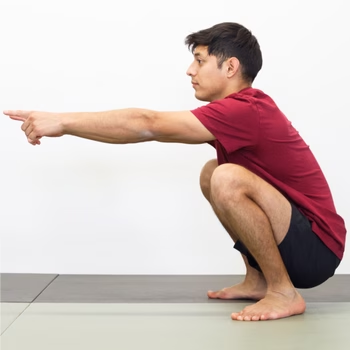 When people hear “foundation,” they often assume it means basic or remedial. Something you do early on, then move past once you’re “ready” for more. In Praxis, your foundational capacity isn’t a phase to be completed. It will be a training priority that stays with you, that facilitates everything else improving.
This learning level is about the breadth of your physical capabilities. Not just how strong you are in familiar patterns, but how well you can move through fuller ranges of motion, coordinate your whole body, and stay relaxed and controlled when things feel unfamiliar.
Many of the “I’m strong but this still hurts” complaints people have are resolved when their foundation improves. Strength can be there for a lot of folks, but be unevenly distributed. Some positions feel solid and dependable, while others feel awkward, tense, or unpredictable. That’s the gap that purposeful foundational training fills.
What this phase supports:
- Strength through fuller ranges of motion, not just your strongest positions
- Integrated, full-body coordination instead of isolated effort
- Confidence in unfamiliar or uncomfortable positions
Elements: Building Baseline Capability
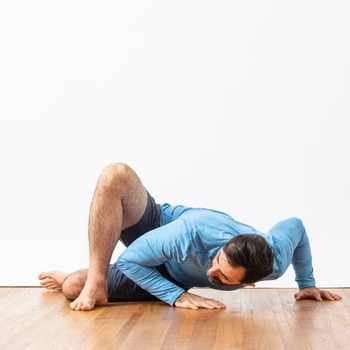 Elements employs full-body movement patterns to build basic strength, but the more important changes happen where you need that strength. You need it in those newer ranges of motion. As that happens, your body control and awareness automatically improves and unnecessary tension starts to drop away.
Instead of putting in effort for it’s own sake, you’ll develop foundational skills that let your body work as a connected system. This connectedness will serve you well as you continue to train for a lifetime and allows progress to keep building without constantly circling back to the same limitations.
When the foundation layer is supported in this way, several things change at once:
- Strength becomes a whole-body quality, instead of limited to specific muscles or lifts
- Mobility improvements carry over into daily movement not disappearing when you stop stretching
- Moving toward more demanding will be a smooth continuation rather than a big leap
Elements isn’t beginner training. It helps you build baseline capability—the foundation layer that supports everything else.
Attribute Development: Shifting The Emphasis
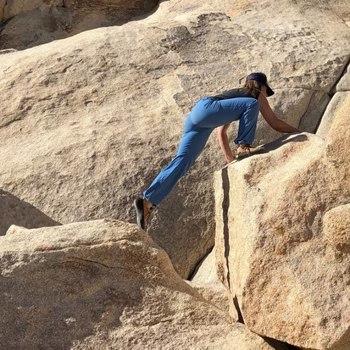 Once a foundation is in place, progress tends to stall for a different reason. And it’s usually not because you aren’t working hard enough. More often, some physical qualities aren’t keeping up with the rest. Strength may be improving faster than mobility. Conditioning may lag behind your ability to move well. Or a good range of motion may be there, but using it with confidence and control is still a challenge.
This is where a focus on attribute development becomes the emphasis. Rather than trying to improve everything at once, Praxis treats strength, mobility, and conditioning as distinct but connected components. They should always be present, but at different times one deserves more emphasis than the others.
That shift allows progress to continue without an overall increase in volume or intensity. A redistribution of effort and time rather just continually adding more weight for you to carry.
The attribute layer includes three main programs
Integral Strength: When Strength is the Limiting Factor
Sometimes movement quality is fine, but strength isn’t showing up where you need it. Positions can be pretty solid at lower effort, then start to fall apart as demands increase.
Integral Strength focuses on developing usable strength through fundamental movement patterns: pushing, pulling, squatting, hinging, and inversion. The difference between it and conventional strength training isn’t necessarily the exercises themselves, but how they’re trained.
You develop strength through more varied ranges of motion, with an emphasis on control rather than just completing one more rep. This makes it a good fit for people who want to maintain or improve mobility while getting stronger, or move past plateaus created by isolated or partial-range strength work.
Mobility: When Access to Range of Motion is the Limiter
In other cases, strength is present but access is limited. You can feel blocked, or simply uncomfortable in certain motions or positions. Mobility training in Praxis focuses on the hips, shoulders, spine, and integrated full-body movement patterns.
The emphasis is on active control and coordination, so new ranges of motion can actually be used practically in your daily life. Passive stretching has value for relaxation and reducing tension, but on its own it’s often less effective for building functional range of motion.
Mobility becomes the priority when stiffness hangs around despite regular training, discomfort shows up at specific depths or positions, or you find yourself thinking, “I used to be able to do this.”
Triple Shot: When Conditioning Limits Progress
Sometimes the limiting factor isn’t movement quality or strength, but how well you tolerate and recover from training.
Triple Shot develops an aerobic base, short higher-intensity efforts, and sustainable stamina. It’s designed to layer well alongside other training rather than simply attaching a “cardio program” to your routine. In this way, conditioning improves without coming at the expense of everything else.
Triple Shot becomes the priority when you get winded faster than expected, recovery between sessions feels unpredictable, or training starts to feel draining instead of supportive.
Attribute development works best when you understand which components are currently limiting your progress and give them enough attention to catch up. This is another way progress can continue organically.
Skill Application: Making Strength and Mobility Work Together
 This is where many people move into new territory, and where the totality of your physical autonomy gets tested. You can develop great strength and have decent mobility, and still have things fall apart when movements get more complex or less predictable.
That’s because real movement isn’t made up of isolated positions that are just stuck together. It happens between positions. It involves transitions, changes in direction, and moments where you don’t have time to stop, reset, and think.
Skill application takes the strength and mobility you’ve developed and shows you how to use them together under changing demands. Not piece by piece, and not one rep at a time.
What this level develops:
- Transitions between positions with proper timing and coordination
- The ability to adapt when things don’t go exactly as planned
- Movement that stays organized even as complexity increases
This is often where people realize why they’ve felt capable in training but hesitant elsewhere. The pieces are all there, but they haven’t been put together well.
Sequences: Practicing Real Adaptability
In daily life and sport, injuries rarely happen during a clean rep in a controlled environment.
They tend to happen while shifting weight, changing direction, during unexpected loss of balance, or when fatigue alters timing and coordination. If you never train these moments, your body doesn’t learn how to manage them.
Sequences develops this layer of skill by linking strength and mobility into continuous movement. Beyond simply memorizing routines, you practice how to be adaptable and responsive to the situation at hand. Adjusting to changing shapes, speeds, and demands while staying relaxed enough to keep options available.
Over time, this builds confidence in movement in a very real and practical way. At this point, strength and mobility stop feeling like separate qualities. They begin to show up together when you actually need them.
Supplemental Programs: Support Without Distraction
 Once people understand the core priorities—foundation, attribute development, and skill application—the next question usually comes up pretty quickly:
How do the other programs fit in?
This is where many people get lost, because there can always be something else to work on. Extra work isn’t necessarily bad, but it can be when added on without a clear purpose. Supplemental work is meant to support progress, yet very often, it ends up competing with it instead.
In Praxis, supplemental programs exist to address specific needs without pulling attention away from the core work. They aren’t meant to be stacked endlessly. Each fills a narrow role and is most effective when used deliberately and for limited periods.
What supplemental programs support:
- Resilience
- Joint strength and load tolerance in the areas you most need them.
- Recovery
- Low-intensity movement that helps you recover between sessions and maintain consistency.
- Respiration
- Better breathing mechanics for endurance, relaxation, and overall performance.
- Floor Loco
- Playful integration of ground-based movement to reinforce coordination and transitions.
- Literal Immortality
- Long-term risk reduction and durability as training history and life stress accumulate.
The guiding principle to using them well is simple:
- Choose one core program
- Add one or two supplemental programs
- Know when to switch them off
Rotating supplemental work over time is far more effective than trying to do everything at once, when too many things are added, nothing gets enough attention to make a real difference. Treat them as support tools and you’ll get the best benefit.
Progress Without Constant Setbacks
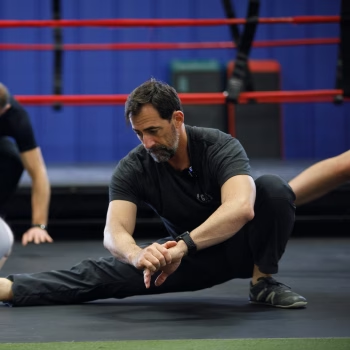 In practice, progress rarely follows a clean, linear path. People don’t move neatly from foundation to attributes to skill application and stay there. Life happens.
Our bodies change and priorities can also change rapidly, it’s just how it goes. What feels like the right focus one month may not make sense the next and the worst thing to do is to force yourself on the same path just because you wrote down a plan and want to “stick to it”.
That’s normal but it’s also almost always the wrong thing to do!
You can break out of this by reframing your mindset and think of moving emphasis instead of feeling like you have to do something fully brand new.
Common cycles can look like these:
- Spending time in foundation work, then emphasizing strength or mobility as specific gaps become clearer
- Returning to foundation work after a period of harder training to restore balance and control
- Emphasizing mobility for a while, then bringing strength back in once new ranges feel usable
- Leaning more into skill application when movement feels good, and pulling back when life or fatigue increases
This is true auto-regulation and adapting well to your situation right now instead of trying to force your plans onto life’s new reality.
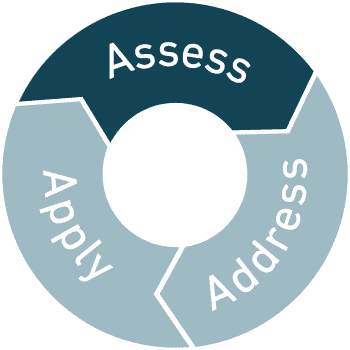 A simple way to frame this is that Assess → Address → Apply keeps repeating:
- You assess what’s currently limiting you
- You address that limitation with the right priority
- You apply what you’ve gained back into broader movement
Over time, this becomes more intuitive. You stop reacting to every ache or plateau by changing everything and instead make smaller, more informed choices.
That’s when you start viewing progress in a different way. You’re less hesitant to move into unfamiliar positions, not because everything feels perfect, but because you trust your ability to adjust when something feels off. Nagging aches become less common, and when they do appear, they’re easier to understand and respond to without panic.
So in this way training itself changes. It becomes a practice instead of a test and it supports your life rather than competing with it.
Where to Start (Without Overthinking It)
If this way of thinking about progress makes sense, the best place to begin is by supporting your foundation. That doesn’t mean starting over or going backwards. It means giving your body the chance to move well across a wider range of positions, with better control and less unnecessary tension. From there, it becomes much easier to see which qualities actually need more emphasis and which are just fine for now.
That’s exactly what Elements is designed to do. Elements helps you build and maintain baseline capability so everything else you do in training has something solid to rest on. Many people are surprised by how much clearer their next steps become once that foundation is properly supported.
If you’re not sure where to focus right now, starting there is usually the simplest and most productive option.
Movement Freedom Is a Skill and You Can Rebuild It at Any Age
With Elements, you’ll build a foundation of strength, flexibility, and control using the Bear, Monkey, Frogger, and Crab.

Hi, I'm Jarlo Ilano PT, MPT 👋
Jarlo Ilano has been a Physical Therapist (MPT) since 1998 and was board certified Orthopedic Clinical Specialist (OCS) with the American Board of Physical Therapy Specialties. He’s undergone extensive postgraduate training in neck and back rehabilitation with an emphasis in manual therapy along with being certified as a Therapeutic Pain Specialist by EIM/Purdue University.
In addition to cofounding GMB, Jarlo has been teaching martial arts for over 30 years, with a primary focus on Filipino Martial Arts.