
You can probably stand on one foot. You might even be able to do it with your eyes closed for a few seconds before things get interesting.
And if that’s your only benchmark for balance, you’re selling yourself short.
Balance is a physical capability, and like any capability, it responds to training. It gets stronger when you challenge it and weaker when you don’t. The problem is that most people treat it like an inborn trait that you either have or you don’t, like being tall or having short femurs. So they test it occasionally, shrug at the result, and go back to their regular training.
That’s a missed opportunity, because balance is one of the most trainable attributes you have.
And it shows up in everything you do — whether you’re cutting on a trail run, catching yourself on ice, or just carrying groceries up stairs while your kid wraps himself around your leg like a koala with attachment issues.
🎙️ Podcast: Training Your Balance
Ryan and I recorded an episode breaking down how balance works, what causes problems, and specific drills for improving it — plus a genuinely terrible secret technique involving smiling like a maniac on the subway.
Stick that in your earhole, or check out more of our sporadic pods here.
What Balance Actually Is (And Why It Doesn’t Work the Way You Expect)

Most people picture balance as standing still on one leg.
That’s one expression of it, the way a bicep curl is one expression of strength.
Balance is the coordination of several systems working together in real time: proprioception (knowing where your body is in space), muscular control (being strong enough to hold or correct a position), reactive timing (adjusting before you’ve consciously decided to), and vestibular input (your inner ear telling your brain which way is up while your head moves).
These systems talk to each other constantly.
When one gets better input, the others can respond more accurately. When one goes quiet due to fatigue, stiffness, distraction, the whole conversation degrades.
That’s why your single-leg stance feels rock-solid on Tuesday and shaky on Thursday. It’s real-time feedback about your readiness, and it’s more useful than most people realize.
Underrated fact: balance is task-specific.
A meta-analysis covering balance performance across the lifespan found only small correlations between different types of balance tasks. Being good at standing still on one leg doesn’t make you good at landing a jump. Being stable during a squat doesn’t mean you’ll stay composed when someone bumps you mid-stride.
What that means practically: training balance in one context gives you balance in that context.
If you want balance that actually holds up across the unpredictable situations your body encounters every day, you need to train it across varied movement contexts. Lots of them.
Why Experience Alone Doesn’t Fix It
Your nervous system has probably encountered plenty of balance challenges over your lifetime — stumbles, sports, amusement parks, that time somebody shoved you into a pool.
But that probably hasn’t turned you into a ninja yet. The conditions matter.
When your body is under stress or fear, the nervous system switches to protection mode. It’s trying to keep you safe, not learn something new.
So all those times you stumbled on a hike and caught yourself, or white-knuckled your way through a roll in a martial arts class, or got dizzy the first time you tried a handstand… well, your body was too busy managing the threat to actually integrate the balance information available.
This is why you can have decades of physical training and still feel unsteady in unfamiliar positions. It’s not just a lack of exposure. It’s that the exposure happened under conditions where learning couldn’t take place.
Controlled, progressive practice fixes this (hint: I’m about to show you how…).
When you work on balance in a setting where you can adjust the difficulty, stay below the panic threshold, and keep your breathing relaxed, your nervous system has the bandwidth to coordinate all those sensory inputs — vision, proprioception, vestibular, muscular control… and actually get better at using them together.
That’s one of the reasons structured movement training works better for balance development than just “doing more balance stuff.”
The environment is designed for learning, not survival.
What Isolated Balance Training Looks Like
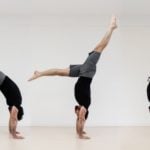
Gymnastics scales are one of the best examples of a focused balance exercise.
A front or back scale combines single-leg strength, hip flexibility, and full-body coordination into one movement. You’ll find out fast where your balance actually breaks down — and whether it’s a flexibility limitation, a strength limitation, or a coordination issue.
Exercises like this are valuable. They give you clear feedback and a measurable challenge you can progress over time.
But they also raise an obvious question: where does this fit? How do you train balance systematically instead of just collecting isolated drills?
Your Daily Balance Check

One answer is to use balance as a daily readiness check.
Stand on one foot for 15-20 seconds. Pay attention.
Does it feel solid and steady, or are you making constant corrections? Switch sides. Is one noticeably worse?
What you’re getting is a snapshot of your current state.
This isn’t your overall “balance ability,” but how well your nervous system is integrating information right now.
If things feel off, that’s useful data. Maybe you’re fatigued. Maybe your hips are tight from yesterday. Maybe you slept poorly and your coordination took a hit. You can adjust your training intensity accordingly.
In our programs, we build this kind of self-check into the session structure.
Alpha Posse members get our a Daily Battery — an 8-minute morning movement routine I’ve been refining since 2012, and balance work is part of it for exactly this reason. You learn what your baseline feels like, and deviations from that baseline tell you something worth listening to.
This is autoregulation at its most basic: use what your body is telling you to make better training decisions today.
How We Built Balance Training into Every Program
Another answer — a more integrated one — is to build balance training into the structure of your program through exercise selection and sequencing.
Since balance is task-specific, a single drill repeated daily gives you one flavor of stability. What actually builds capable, real-world balance is encountering balance challenges across different movement contexts, positions, speeds, and loads, in a controlled environment where your nervous system can learn from each one.
Here’s how the Praxis curriculum does it:
Elements: Fundamental Proprioception and Coordination
Every session in Elements challenges your balance, even when that’s not the obvious focus.
Bear and Spiderman progressions train contralateral coordination — right hand, left foot moving together while your hips stay high and your weight shifts between your hands. Your vestibular system is working constantly because your head position keeps changing relative to gravity.
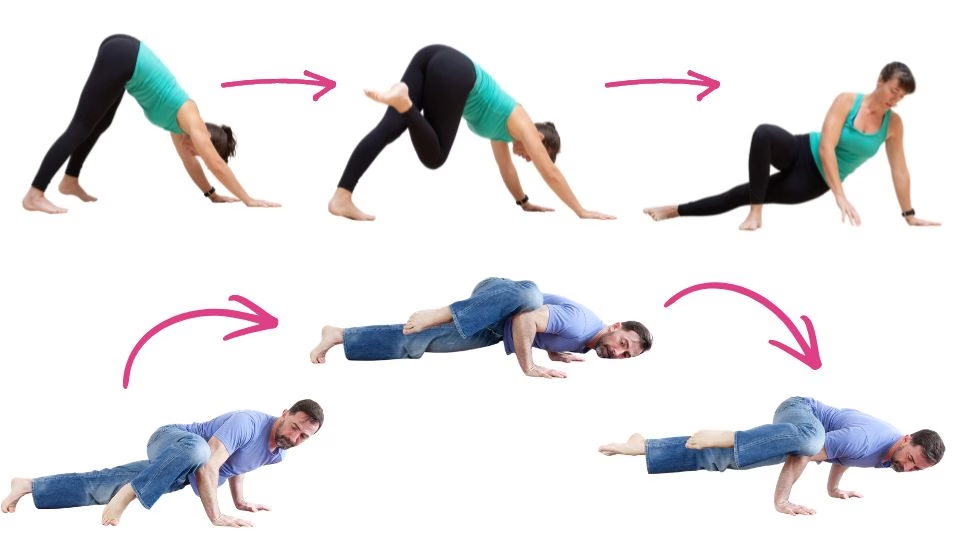
Monkey is lateral movement through a squat, shifting your center of mass side to side while your upper and lower body coordinate a weight transfer.
Frogger loads your hands and then your feet in an anterior-posterior weight shift that requires precise timing and core control to keep from face-planting.
These movements train balance through all four limbs, build unilateral awareness, and stimulate your proprioceptive and vestibular systems all while you’re focused on learning a movement skill.
The balance training is baked into every practice.
Integral Strength: Loaded Single-Leg Balance
Once you’ve built foundational coordination, Integral Strength introduces balance under real strength demands.

The shrimp squat is a direct balance and stability challenge. Try lowering yourself on one leg with control and you’ll discover exactly where your stability breaks down.
Cossack squats shift your weight laterally under load. Lunge variations challenge deceleration and directional change. Inverted pressing asks you to manage balance through your hands while pressing overhead.
These are balance challenges with consequences: if your stability isn’t there, you can’t complete the rep with quality. That’s a feedback loop you can’t fake.
Sequences: Dynamic and Reactive Balance
Sequences takes the foundation and strength you’ve built and applies them at speed and complexity.
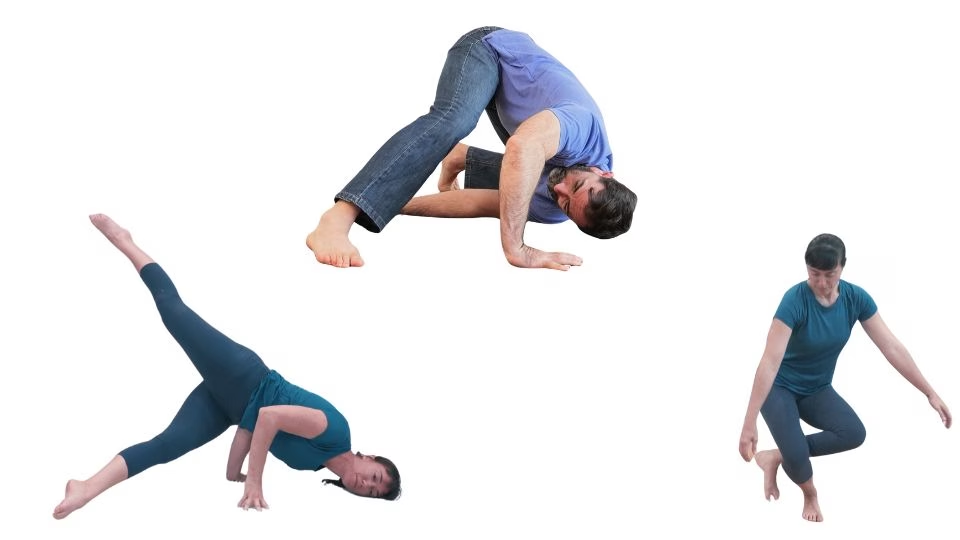
Jumps, turns, and inverted transitions demand reactive balance — the kind where you’re adjusting in real time to forces you initiated but can’t fully predict.
This is where balance stops feeling like a static quality and starts showing up as agility, composure, and confidence during action.
Supplemental Training
The supplemental curriculum reinforces balance through varied contexts:
Resilience includes duck walks and sit-to-stand patterns — ground engagement that builds stability from positions most training programs never touch.
Literal Immortality trains sit-to-stand and other longevity-correlated movement patterns where balance is a primary predictor of long-term physical independence.
Floor Loco develops transitional balance through rolling, rotating, and shifting between positions on the ground.
Each of these adds another dimension of balance challenge.
None of them duplicates what the others do.
That’s the whole point.
More Ways to Challenge Your Balance
Beyond the scales shown above, here are additional drills you can add alongside your main training — jump spins, eyes-closed walking, and hand-balancing progressions, each scalable to your current level:
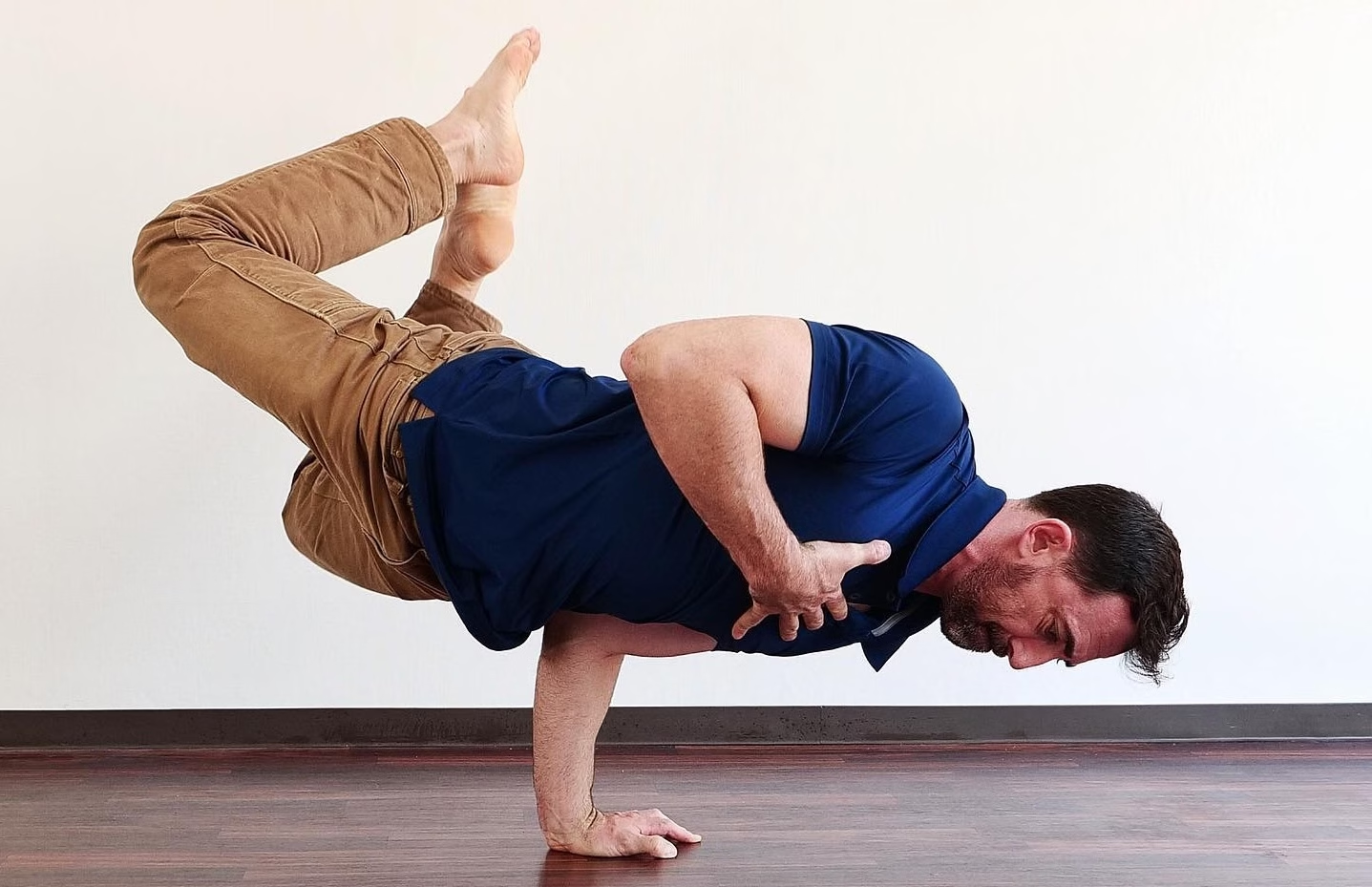
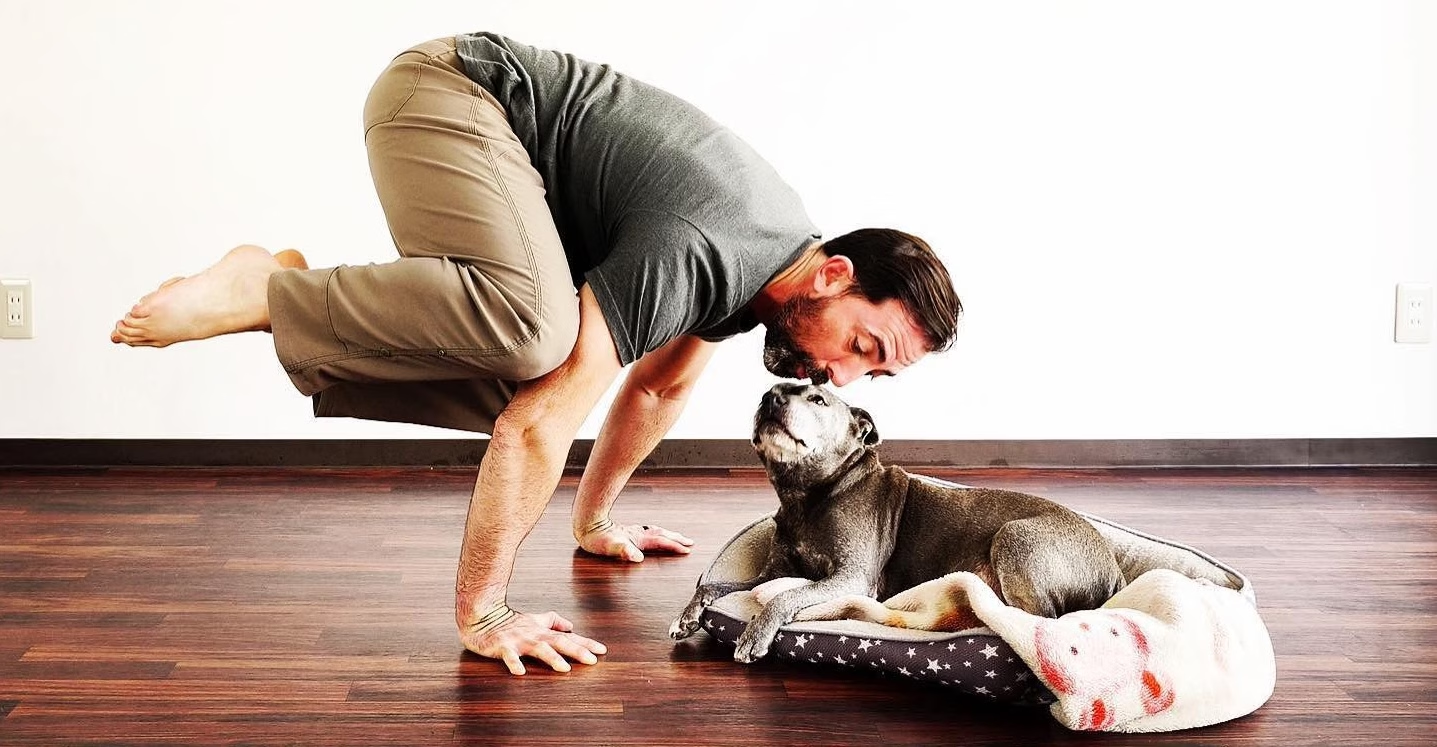
If you want to take balance into your hands (literally), the crow pose is an accessible entry point to inverted balance.
And the handstand is the deep end — a full-body balance challenge that integrates everything: strength, proprioception, vestibular control, and the ability to stay calm while upside down.
A few principles for integrating extra balance training:
Frame these practices as supplements to your main training.
A few minutes before or after a session is plenty.
Use them as readiness checks: if your single-leg balance is noticeably worse than last week, that’s worth paying attention to.
And rotate what you practice.
Remember: balance is task-specific. Variety is the mechanism.
Balance Gets Deeper, Not Easier
The fitness industry treats balance as a concern or the elderly or people with medical conditions — something you address as a correction and ideally graduate from.
But every serious coach in every sport knows that balance is an important and trainable attribute.
Balance is a physical capability that develops greater depth and sophistication the longer you train. A beginning Elements client working on Bear coordination is training balance. A long-term practitioner flowing through Sequences transitions is training balance.
Same attribute, different layers.
You don’t reach a point where your balance is “done.” The challenges just keep getting more interesting 🙂
Build Balance That Shows Up When It Matters
It builds practical balance training into every session.
Where Balance Goes From Here
Elements is the foundation.
Integral Strength adds loaded single-leg balance and inverted pressing.
Sequences develops dynamic agility through jumps, turns, and complex flows.
See how everything connects in the full curriculum overview.

Hi, I'm Andy Fossett 👋
A lifelong martial artist and former schoolteacher, Andy's deeply concerned with autonomy and fitness education. As CEO, he's dedicated to providing an open, accessible culture for both clients and staff to enjoy exploring more of what they're truly capable of.
These days he mostly coaches teachers, from GMB Trainers to martial arts instructors around the world. The rest of his time goes to burgers, bourbon, and his wildly off-topic rants on the GMB Podcast.