
Skill, strength, and conditioning are different adaptations. Your body builds them through different systems, and each system responds to a different style of work.
When a session treats all three the same, you get partial results from all three. We see this pattern in client check-ins all the time: years of consistent work, decent numbers, and a creeping sense of maintaining rather than improving.
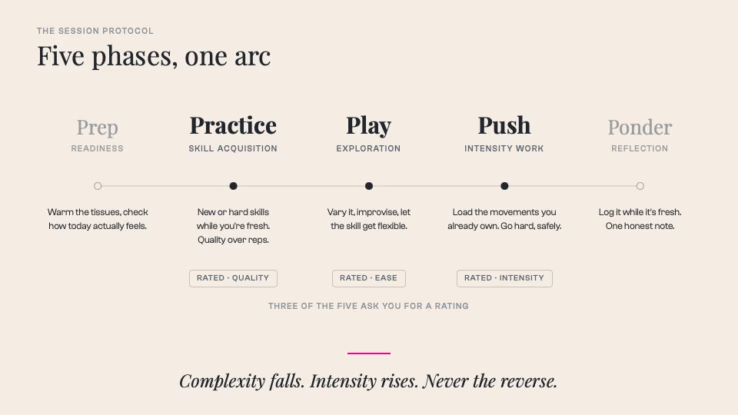
So we split every session into Practice, Play, and Push. Each part gives one type of work the conditions it needs.
One Progression Model Can’t Cover Everything
Most of us inherit our session structure from one of two places, and both work well for the thing they were designed for.
If you come from the gym, you learned volume progression: sets, reps, load, add a little each week. Muscle adapts to accumulating stimulus, so for strength this works beautifully. Skills are a different story. Add reps to a movement you haven’t refined yet, and you get more repetitions of a pattern that degrades as you fatigue. The counter climbs while the movement stays the same. We wrote a whole article on why reps don’t count.
If you come from the skill side, you learned the ladder: master step three before you try step four. That’s reasonable guidance early in skill acquisition. Strength and conditioning don’t need that kind of permission, though. They need load and effort, and holding them behind a mastery standard parks your progress at a gate that never needed to be there.
Neither model is wrong. Each one is stretched across three adaptations when it fits one.
Imagine three recipes: lasagna, oatmeal raisin cookies, and cobb salad.
As three distinct parts of a meal, each one is pretty damn great. Mix them all together, and you’ve got a disgusting mess on your hands.
Well, that’s exactly what happens when you try to train different attributes with the same protocols.
The Settings That Separate Practice, Play, and Push
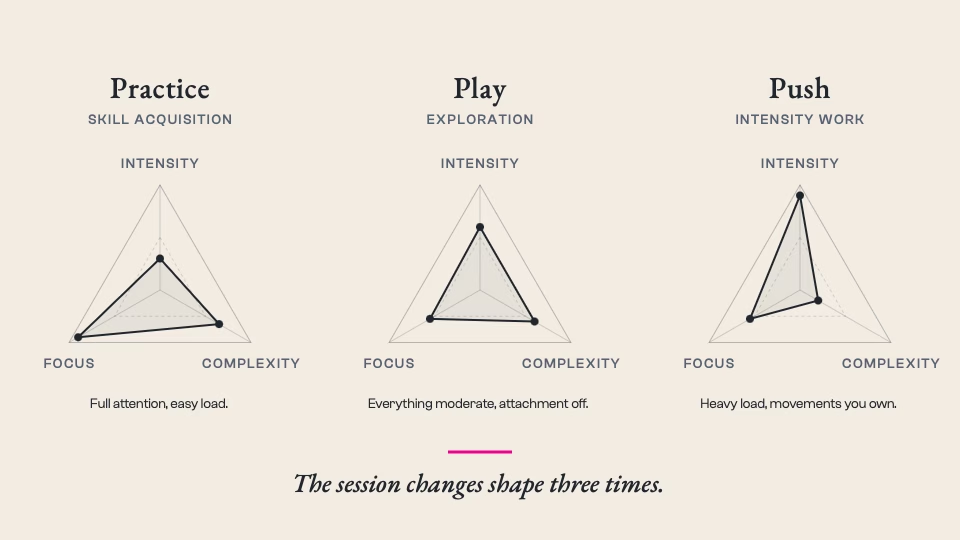
The difference between the three comes down to three settings: intensity, complexity, and focus.
Guitarists do this naturally. There’s slow metronome work on a passage you can’t play cleanly yet. There’s noodling around, following whatever sounds interesting. And there’s playing the song at full speed, start to finish, sweating through the hard part. Every guitarist knows which one they’re doing at any given moment, and nobody expects one to substitute for the others.
Practice Is Skill Acquisition
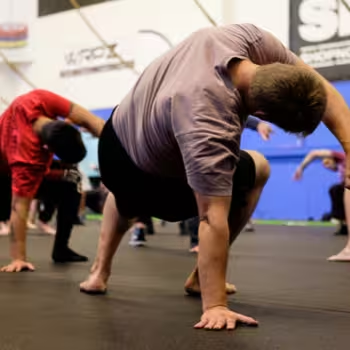
Practice is where you acquire skill. The load stays light, the complexity climbs gradually over time, and your focus narrows to a single point: the quality of this rep, right now.
This is why our programs use timed sets instead of rep targets. A rep target aims your attention at completion. A timed set aims it at quality, and attention is the input that makes practice work. We call this Time Under Attention, and it’s the reason two people can do the same seven minutes of Bear and come away with completely different results.
Practice has a property that surprises people coming from the gym: effort barely matters here. Straining at a skill doesn’t teach it faster. Precision does. If a movement takes everything you’ve got just to complete, drop to an easier variation and practice that instead. Grinding at your limit has its place, and it comes later in the session.
When Practice ends, you label it for Quality: how well you stuck to the form cues. Clunky, Smooth, Snappy, or Rough.
Play Is Exploration

In Play, intensity sits in the middle, focus opens up, and attachment to outcomes switches off.
This is the part people skip because it looks optional. It isn’t. Variation is a learning input. When you practice one version of a movement, you learn that version. When you play with twenty variations of it, you learn the movement. The motor learning effect is well documented, and it’s the difference between a skill that works in one rehearsed context and a skill that shows up whenever you need it.
Play is also where training stops feeling like homework. That does more for your long-term results than any programming variable, because it’s the reason you’ll still be doing this in five years.
When Play ends, you label it for Ease: how your moves felt while you explored. Relaxed, Natural, Mechanical, or Cautious.
Push Is Intensity Work

In Push, the load goes up, the complexity comes down, and your focus shifts to effort.
The movements here are ones you already own. That’s both the safety mechanism and the point. Intensity applied to a movement you control builds strength and capacity. Intensity applied to a movement you’re still figuring out builds compensations, at speed. The guy doing squats on a wobble board has turned both dials up at once, and he’s getting less from each. Simple is a feature in Push, and the more complexity a movement carries, the less load it can absorb.
Conditioning belongs here too. Same settings, longer duration: simpler movements, sustained effort, shorter rest.
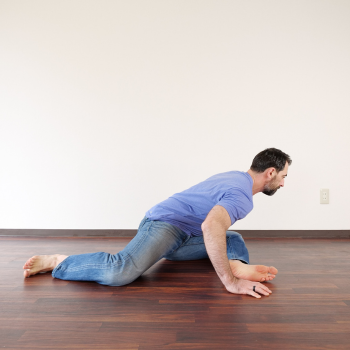
Deep stretching is the one that surprises people: it belongs in Push as well. Working your end ranges takes real effort, loads tissue that needs to be warm, and uses positions simple enough that you can afford to strain in them. Treating flexibility work as an easy cooldown is a big part of why years of dutiful stretching can produce so little change.
When Push ends, you label it for Density: how hard you worked and how much rest you took. Chill, Steady, Heavy, or Intense.
What Happens When You Mix the Settings
You can’t build fine motor skills, balance, or coordination when your brain is fighting for oxygen.
Fatigue degrades coordination, so the version of the movement you wire in at the end of a hard set is the worst version you did all day. Your nervous system learns it anyway.
Do your strength work at Practice settings and you never give the muscle enough stimulus to adapt. Careful, easy, precise sets of a movement are great for learning. But the dose is too low for the system you’re trying to change.
Run the whole session as Play and you get variety without direction. Plenty of movement, no progression.
Exercise selection and progression are what you usually see people talking about on social media. “Just follow these six easy steps!” But in practice, protocol and sequencing make a huge difference in your results.
Don’t ignore them.
Why this Order Is the Order
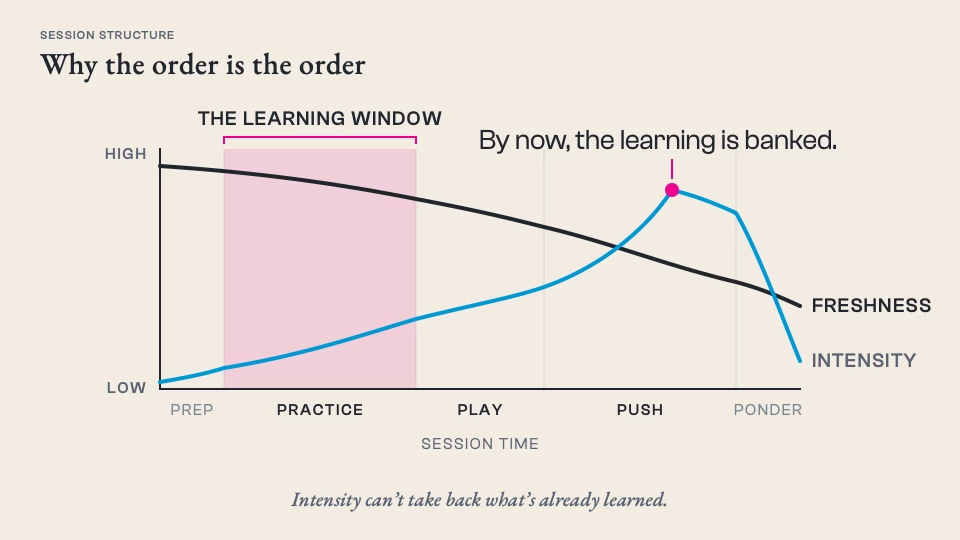
Practice comes first because learning is the most perishable thing you do in a session. Coordination, timing, and attention all peak early, so the careful work claims that window.
Play comes second because it consolidates what you just practiced. Variations of fresh material broaden the skill while it’s still warm, and the moderate intensity makes Play a natural ramp toward the harder work ahead.
Push comes last, and this is the part many programs get backwards. By the end of the session, fatigue can’t take much from you. High effort now meets simple movements you own, which is the one combination where fatigue is safe to accumulate.
Two smaller phases bookend the sequence. Every session opens with Prep, a few minutes of preparation that double as a readiness check, and closes with Ponder, a few quick steps where you pick what challenged you most and where you felt the most control, tag the session, and note anything worth remembering. Together with your Quality, Ease, and Density labels, that’s what you use to set up tomorrow’s session.
That feedback loop is autoregulation: the mechanism that fits the program to the body that showed up today.
Everything You’re Training For, Organized
This is how skill, strength, conditioning, and the injury resistance people call longevity all fit into a single session, without separate protocols to juggle.
The longevity part is the one people are most skeptical of, and fair enough, because it’s invisible.
Longevity is a property of the sequencing. Intensity only touches movements you control. Learning never happens in a degraded state. The dose adjusts to your daily condition through the Ponder loop. An injury-prevention program built as a separate thing would demand its own sessions.
This structure is baked into every Praxis program.
Here’s Ryan going through a complete Elements session at the challenging end of the dial. Watch how the same movements come back around in Practice, Play, and Push as the session goes on:
The Structure Is Already Built In
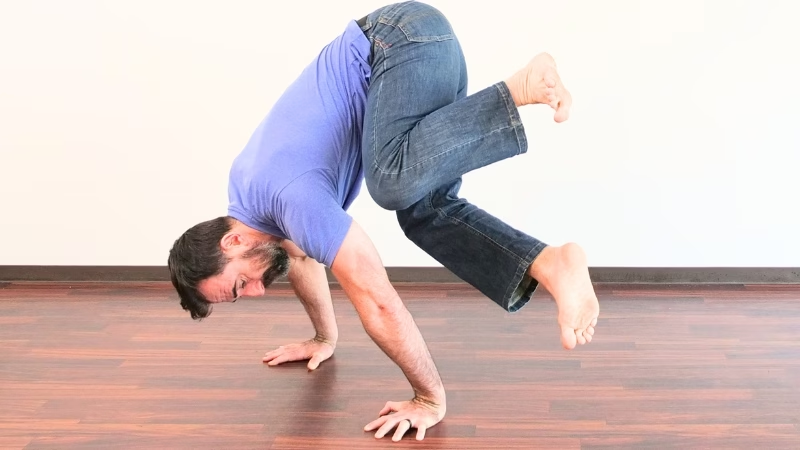
Elements teaches Bear, Monkey, Frogger, and Crab through the full Practice, Play, and Push cycle, so every session covers strength, mobility, and control in the order your body learns best.
Hi, I'm Andy Fossett 👋
A lifelong martial artist and former schoolteacher, Andy's deeply concerned with autonomy and fitness education. As CEO, he's dedicated to providing an open, accessible culture for both clients and staff to enjoy exploring more of what they're truly capable of.
These days he mostly coaches teachers, from GMB Trainers to martial arts instructors around the world. The rest of his time goes to burgers, bourbon, and his wildly off-topic rants on the GMB Podcast.