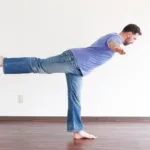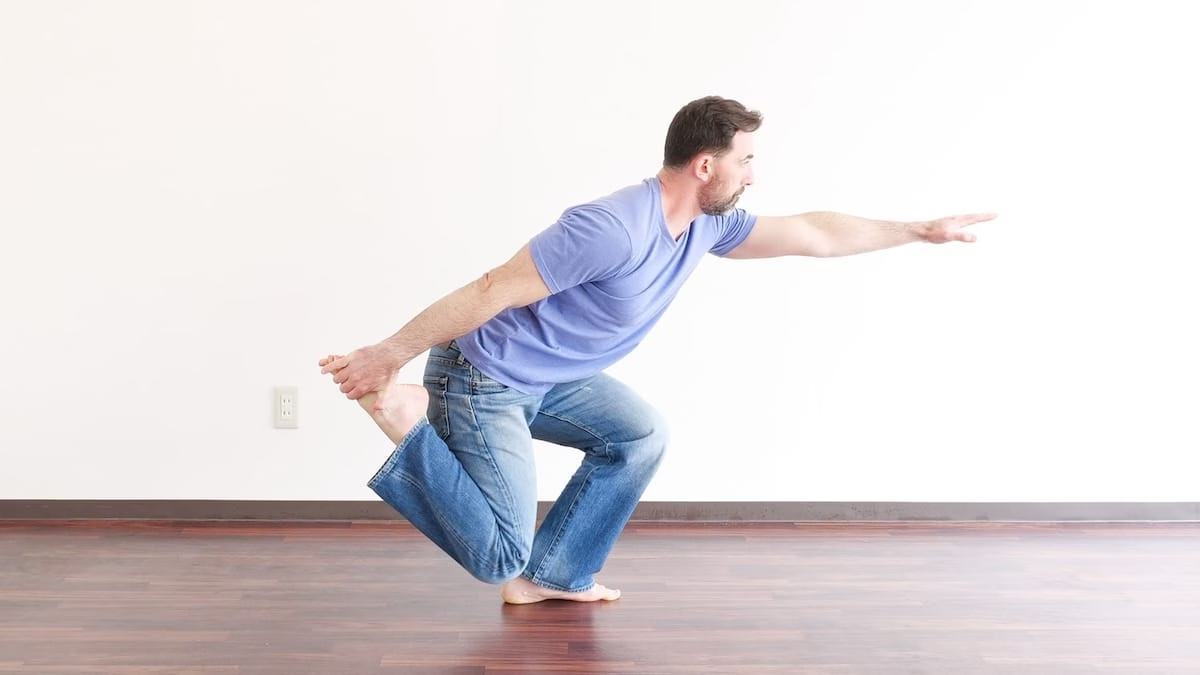

If you want to start training single-leg squats, you’ve got two solid options, and most people reach for the harder one first.
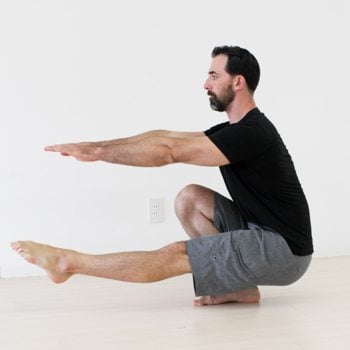 You already know the pistol squat. It’s the flashy one, and if you can pull it off you look like a total badass doing it. No argument there. It’s also genuinely hard, and it asks for a specific mix of flexibility, strength, and control before it comes together.
There’s another single-leg squat that’s a better starting point for most people, and almost nobody talks about it. The shrimp squat.
In this article I’ll break down how the two differ, and why I’d start you on the shrimp.
Shrimp Squats and Pistol Squats: Similarities and Differences
Both are single-leg exercises that demand good balance and joint mobility to do well. If you’ve never trained single-leg before, expect them to feel frustrating until you put in some practice.
The main difference is where your center of gravity sits during each one.
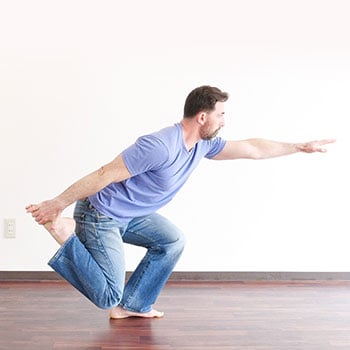
The shrimp squat keeps your weight balanced over the midfoot. It’s a little friendlier on balance because it’s more quad dominant. The catch is that the full movement asks for real strength and ankle mobility to come out of the bottom.
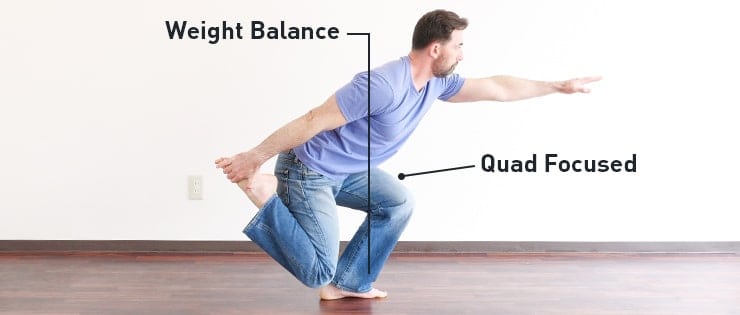
The pistol squat shifts your weight back over the heel. It leans less on the quads and more on the glutes, and it needs better hip flexor mobility, strength, and balance at the bottom.
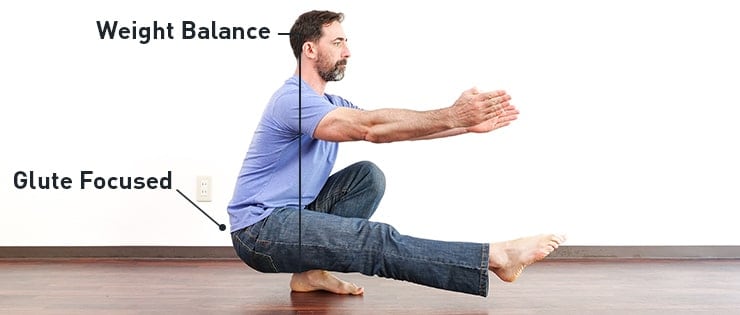
Both have sticking points that depend on your own strength and flexibility, and you can work toward full range over time.
I demonstrate each one in the video below. If you can already do bodyweight squats without trouble, you’re clear to start on single-leg work.
Why I’d Start You With the Shrimp Squat

If you had to pick one to begin with, start with the shrimp. It’s what we use in Integral Strength, because the progressions and variations scale cleanly to your current strength and flexibility.
I like the shrimp because it trains your ability to bend and control through both the knee and the ankle.
As you get more proficient, that carries into a lot of other things: running up stairs, steep hikes, squatting down to haul a heavy bag of groceries off the floor.
The strength you build learning to squat well makes single-leg work far less brutal at the start. And the more single-leg work you do, the better your regular squat gets. It runs both ways.
If you’re set on the pistol, here’s my full pistol squat tutorial with the bottom-up progression.
In the video, I walk through the key differences and show you a few variations to play with:
Troubleshooting Single-Leg Squat Issues
The two things that trip up almost everyone starting single-leg work are flexibility and strength.
Most people are short on flexibility in the ankles, feet, or hips, or some combination. Start with a self-assessment to find where you’re actually lacking, in both mobility and strength.
If your ankles and feet need work, here’s our guide to opening up ankle and foot range. If your hips are tight from sitting, work through our hip mobility routine. And if your heels lift the moment you sit deep, that ankle story is covered in why your heels come up.
“My Knees Go Over My Toes. Is That Bad?”
You’ve probably read the warnings, and seen people in the comments tearing apart anyone squatting with their knees out past their toes.
It’s fine. As long as your knees go past your toes on healthy joints, with no pain or injury at the patellofemoral joint, it’s safe for them to track over your toes as you squat.
One study put it plainly: “contrary to commonly voiced concern, deep squats do not contribute increased risk of injury to passive tissues” [1]. Get good instruction, progress sensibly, and you’re not courting injury.
Another study shows the opposite risk: if you don’t let the knees travel forward naturally and load the squat properly, you push more stress into the hips and lower back [2].
So there’s no need to fear knees over toes, especially when it comes naturally and you can control it. The real work for the shrimp squat is building strength through your whole body.
Like anything, it should follow a progressive plan that meets you where you are. Since I’m partial to the shrimp, that’s what we build in Integral Strength.
Learn the Shrimp Squat in Integral Strength
Integral Strength is a skill-based strength program that builds practical strength you can use in the activities you care about, with the shrimp squat as one of its cornerstones.
Hi, I'm Ryan Hurst 👋
After a training accident ended his competitive gymnastics career, Ryan moved to Japan, where he spent close to 30 years training and competing in judo, kendo, and other martial arts until another injury made him rethink what training is for.
As Head Coach, he leads program design and teaches every week on our YouTube channel. His book, Stay On The Mat Forever, is aimed at helping you keep training for decades. He loves handstands, dogs, and hiking.